By
By 
Mahamadou Toure
By Mahamadou S. Toure
Every community carries knowledge that cannot always be found in textbooks.
It lives in the experiences of parents, elders, professionals, community leaders and ordinary people who have spent decades learning from work, family, migration, success, disappointment and responsibility.
The question is: What happens to that knowledge when the generation carrying it is no longer here?
My own journey as an author eventually led me to publishing. I began by writing about subjects that I believed mattered to my community—family, education, culture, faith and the experiences that shape our lives. But as I continued writing and interacting with people around me, I began to notice something larger.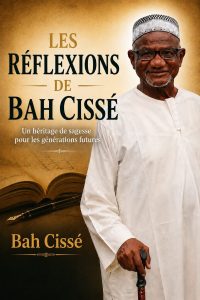
Many people in our communities have something valuable to say. They understand challenges that families face. They have reflections about parenting, education, marriage, community responsibility, culture and the difficulties of adapting to a changing world.
Yet not everyone is a writer.
In many of our cultures, knowledge has traditionally traveled through speech: conversations, storytelling, proverbs, advice, teaching and the words of elders. Oral tradition has preserved knowledge for generations.
But every generation also requires us to think about how that knowledge will continue traveling.
Today we live in an age of smartphones, digital media, artificial intelligence and rapidly changing technology. Our methods of communication are changing, but the value of human experience has not disappeared.
That realization has increasingly influenced my work in publishing: tradition and culture sometimes need a new format in order to continue reaching a new generation.
Knowledge Must Be Passed Down
This idea became particularly meaningful to me through my conversations with Bah Cissé, a retired mechanical engineer whose reflections I have been helping bring into book form.
Despite reaching retirement, Bah Cissé continued working.
When asked why he would continue after retirement, his answer expressed something much larger than employment: knowledge has little value if it is never passed down.
Continuing to work can mean much more than earning an income. An experienced person can train someone younger. A professional can mentor an apprentice. A retired worker can teach skills accumulated over decades. An elder can explain mistakes so that another generation does not have to discover every lesson from the beginning.
That is transmission.
And it made me think differently about publishing.
A book does not have to begin with someone sitting down and declaring, “I am a writer.”
Sometimes it begins with a lifetime of experience.
The role of publishing can then become helping that experience find a durable form—listening, organizing, documenting and transforming spoken reflections into something that can be preserved and shared.
From Oral Tradition to the Book
For immigrant and African communities, this question deserves particular attention.
Our communities contain people who have lived remarkable lives. Some have been educators, engineers, entrepreneurs, religious leaders, parents, public servants, farmers, artists and community builders. Others may never have carried an important professional title but possess decades of practical wisdom about life and society.
Much of that knowledge remains oral.
If we do not intentionally preserve it, some of it will disappear.
This does not mean abandoning oral tradition. It means allowing oral tradition to travel through additional forms.
A conversation can become a recording.
A recording can become a transcription.
A transcription can become a collection of reflections.
A collection of reflections can become a book.
A physical page and digital technology can work together to preserve and transmit knowledge in new ways.
Support the New Americans magazine to continue to serve our community with precise news that affect the new American, immigrant and refugee community. https://paypal.com/donate/?hosted_button_id=8LHFS78NRNJJY&source=url