 By
By - How the Fifth New Americans Book Fair Connected Creativity, Child Safeguarding and Family Strengthening
By Taiwo AKINLAMI
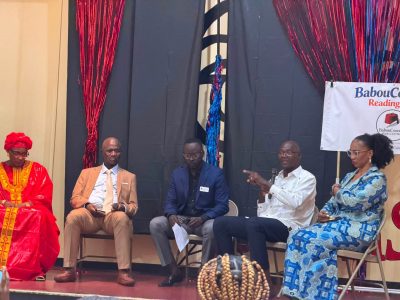
Before Sidy Bah’s creative work found a place at the Fifth New Americans Book Fair, it had a much more ordinary exhibition space: his family’s dining table. The table had gradually become Sidy’s workplace. There, with his pencil, he drew, wrote and brought his emerging ideas to life. His earliest efforts may have appeared little, but his parents chose not to treat them as insignificant. Each time he brought something new, they paid attention. They encouraged him. They celebrated what he had produced. At the book fair, Sidy’s mother, Aminata Bah, herself an author shared the family’s experience during a panel conversation about children and creativity. Her account captured one of the most important messages from the event: when children create, families must listen.
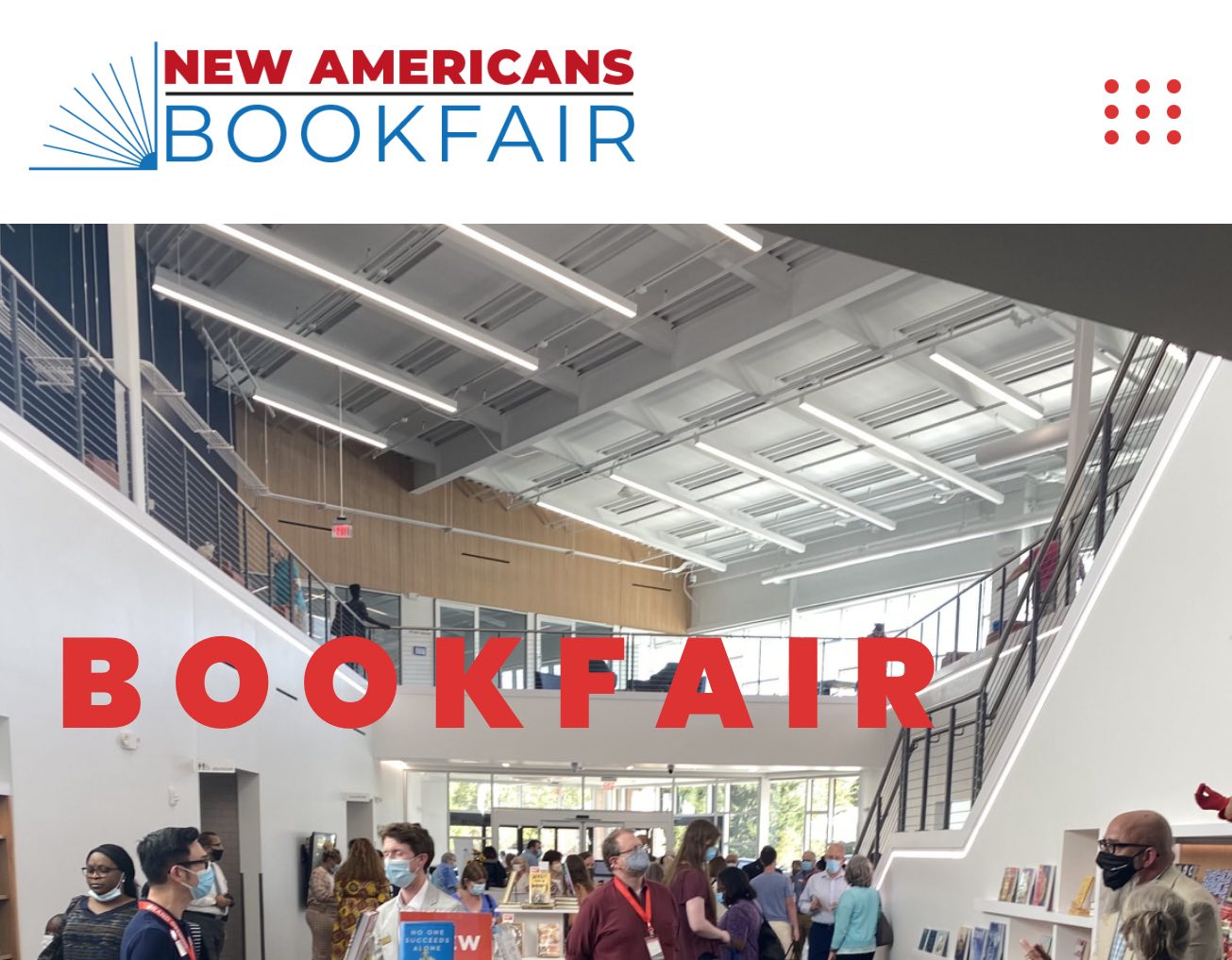
Held on September 19, 2026, at the Columbus Metropolitan Library’s Karl Road Branch, the fair brought together authors, publishers, artists and families, particularly from Central Ohio’s immigrant and refugee communities. This year, children were not simply brought along to observe adults. Through the inaugural Children’s Creative Writing and Arts Festival, they received a platform on which to present their stories, drawings, books and inventions. From a child-safeguarding and family-strengthening perspective, that matters. Children are more likely to thrive in families where their voices are respected, their ideas are taken seriously, and their emerging abilities are nurtured without ridicule or unhealthy pressure.
Three Generations, One Creative Legacy
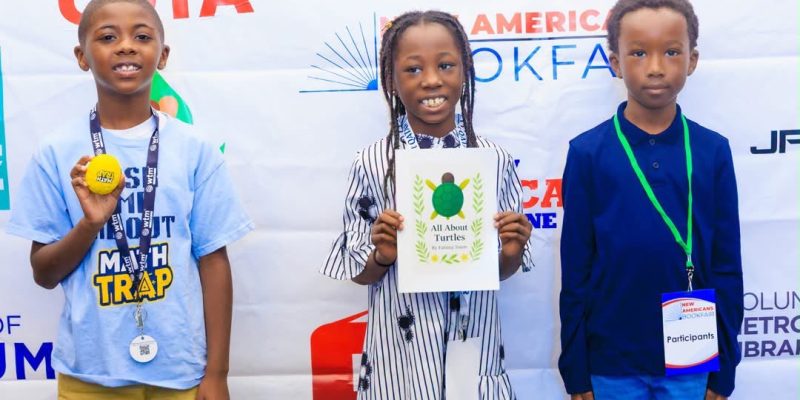
Perhaps the most striking illustration of creativity as a family legacy came from the Touré family. Three generations of the family were represented at the fair: a grandfather and author visiting from Mali; his son-in-law, Mahamadou S. Touré; and his 10-year-old granddaughter, Fatima Touré, who is already an author. It was a rare and powerful picture of intergenerational creativity. The grandfather had travelled from Mali carrying his own history and experience as an author. His son was present as another link in that creative chain. Beside them was Fatima, not merely observing the writers who came before her, but taking her place as an author in her own right. Mahamadou shared how Fatima’s book began as a school project. What could have been graded, returned and eventually forgotten was recognized as something with greater possibilities.
With adult encouragement and practical support, the project travelled beyond the classroom and became a book. That progression is family strengthening in practice. Talent does not necessarily pass automatically from one generation to another. What can pass through a family, however, is an environment: exposure to books, respect for ideas, permission to experiment and the presence of adults who demonstrate that creative work is worth pursuing. When children see parents and grandparents reading, writing and taking ideas seriously, creativity becomes familiar. It becomes something they are permitted to attempt. The Touré family’s presence also carried an important message for immigrant families.
Migration does not have to break the transmission of cultural and intellectual heritage. Stories, language, memory and creativity can become bridges connecting children to previous generations, even as they form identities in a new country. Such continuity can strengthen a child’s sense of belonging, an important protective factor in healthy development.
Small Beginnings, Significant Possibilities
The New Americans Book Fair began in 2022 as a platform connecting authors, artists, filmmakers, publishers and other creators, particularly within immigrant and refugee communities. Its attention to children became more visible in 2025 with an essay, short-story and drawing competition for pupils from kindergarten through Grade 12. The response helped inspire the inaugural Children’s Creative Writing and Arts Festival at the fifth edition. The festival represented an acknowledgement that children are already creators and contributors, not simply adults in the waiting.
Seven-year-old TJ Hutchinson demonstrated that creativity also extends beyond conventional writing and drawing. He presented Math Trap, a mathematics card game he created. His work showed that children’s creative abilities may appear through games, problem-solving, numbers, technology or the reimagining of how a subject can be taught.
Sidy’s dining-table creations, Fatima’s school project and TJ’s mathematics game all began differently. Yet they carry the same lesson: children’s gifts often appear in ordinary moments before receiving public recognition. The response of adults can determine whether those gifts are strengthened, ignored or silenced.
“A Gift Comes With Gifts”
During the panel, Taiwo Akinlami, Founder of LawGuard360 LLC, Co-Founder and CEO of The Power Parenting Company LLC, and Curator-in-Chief of Children Info Bank, connected creativity with child safeguarding and family strengthening. “Children come into this world loaded,” Akinlami said.
Children do not arrive empty, waiting for adults to manufacture value inside them. They come with inherent worth and the capacity to imagine, question, explore and create. Invoking the understanding of education as a process of drawing out what lies within, he said the responsibility of parents and caregivers is to help children discover and develop their abilities.
“Every child is a gift,” he said. “And a gift comes with gifts.” Akinlami illustrated the point through his four-year-old son, whose unusual observations he began compiling under the working title “Tieri’s Sayings.” Those statements, attentively preserved by a parent, could eventually become a book. Whether a book is ultimately published is not the most important consideration. What matters first is that the child is learning that his thoughts are worth hearing and preserving. Creativity as a Safeguarding Resource Creativity does not automatically protect children from abuse, neglect or exploitation. It cannot replace safeguarding policies, attentive adults or effective child-protection systems. But an environment that supports creativity can strengthen the conditions that help keep children safe. When parents listen to children’s stories, welcome their questions and respect their expressions, they build trust.
A child who is accustomed to being heard may be more willing to speak when something is wrong. A child whose ideas are not mocked may find it easier to disclose fear, confusion, mistreatment or an uncomfortable encounter. Writing, drawing, storytelling, music and play can also give children ways to communicate experiences they may not yet have the vocabulary or confidence to explain directly. Adults should not assume that every drawing or story contains a hidden disclosure. They should, however, remain attentive, ask calm and open-ended questions and create opportunities for children to speak without fear of ridicule or punishment. That is where creativity intersects with safeguarding: it helps build relationships in which communication is normal, children’s voices are respected and trusted adults are emotionally available.
The Fifth New Americans Book Fair demonstrated what becomes possible when families and communities take children’s creativity seriously. The children brought stories, drawings, books, games and ideas. The Touré family brought three generations of creative continuity. And the adults brought something every child needs: Attention. Encouragement. Safegaurding. And room for small beginnings to become significant possibilities.
Support the New Americans magazine to continue to serve our community with precise news that affect the new American, immigrant and refugee community. https://paypal.com/donate/?hosted_button_id=8LHFS78NRNJJY&source=url