By
By By Sudarshan Pyakurel
It sent shockwaves through the Bhutanese-American diaspora and across our global community when news broke that a delegation of 15 U.S. congressional, plus local representatives had quietly visited Bhutan and Nepal between April 6 and April 14, 2026. Sponsored by the United Nations Foundation (UNF) and the Eleanor Crook Foundation (ECF), the trip occurred completely outside the view of public media scrutiny.
For resettled Bhutanese Americans, this trip is deeply significant, and raises urgent, eyebrow-raising questions. The United States and Bhutan have never maintained formal bilateral diplomatic relations. Meanwhile, our diaspora carries legitimate, multi-generational grievances: the brutal ethnic cleansing campaigns of the 1990s, the political prisoners still languishing in Bhutanese jails, the remaining stranded refugees in Nepal, and our denied visitation rights to our ancestral homeland.
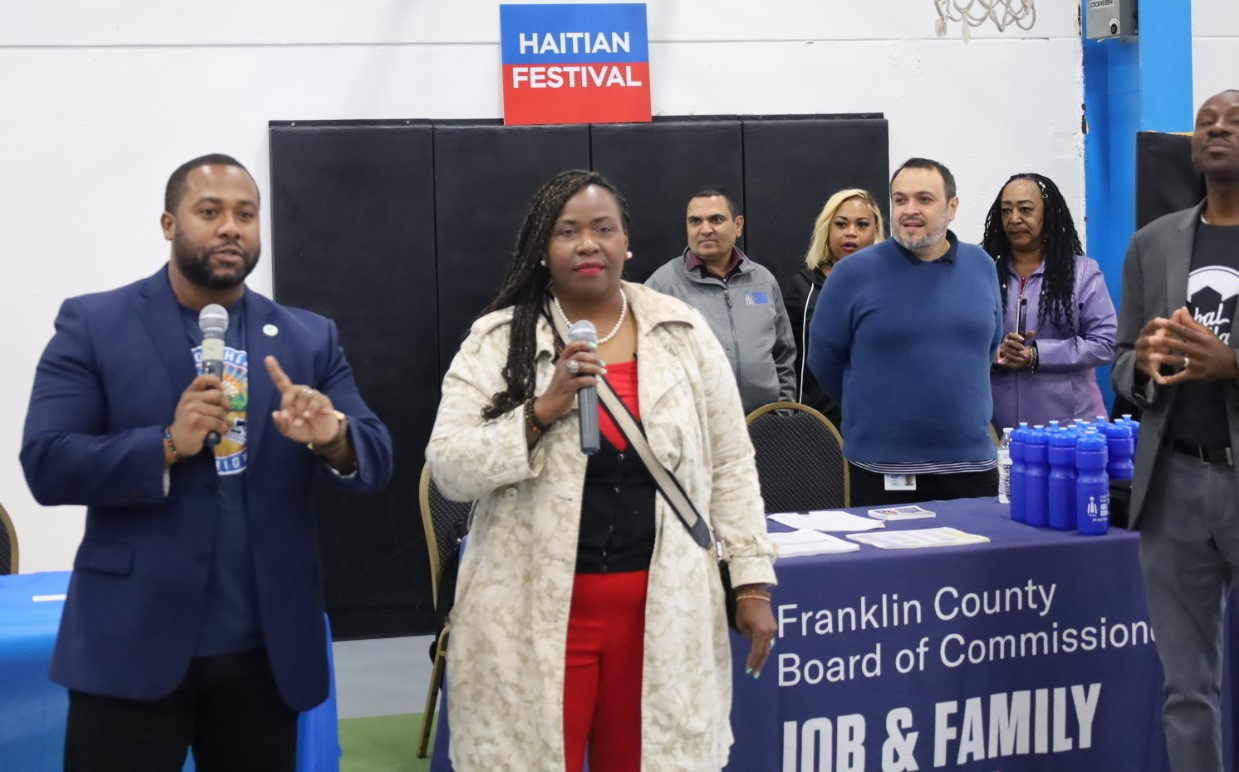
Compounding this skepticism is a troubling lack of transparency. Several of the elected officials on this trip represent districts with the largest Bhutanese-American concentrations in the nation, including U.S. Congresswoman Emilia Sykes (representing Akron’s 13th Congressional District) and Franklin County Commissioner Kevin Boyce(representing Central Ohio). Yet, neither these nor other officials met with their Bhutanese-American constituencies before or after the trip to share their objectives or findings. Democracy requires transparency, and transparency begins with asking hard questions and documenting uncomfortable facts.
The Illusion of Gross National Happiness
Bhutan’s human rights record cannot be glossed over by its modern marketing campaigns. In the early 1990s, the Royal Government of Bhutan forcefully expelled nearly one-sixth of its population. Even today, political prisoners remain locked away for daring to speak out against policies that violate democratic norms. While Bhutan claims to be transitioning into a modern democracy, the reality on the ground tells a story of heavy censorship and severely restricted freedoms of expression, press, assembly, and protest.
Internal observers document that over 80,000 people living inside Bhutan today remain entirely undocumented and stateless. The majority of them are Nepali-speaking Lhotshampas. Stripped of citizenship, they are denied access to formal employment, land ownership, higher education, and basic healthcare.
While Bhutan champions “Gross National Happiness” (GNH) as its signature global export, the reality is starkly contradictory: in the 2025 Global Happiness Index, Bhutan ranked a dismal 95th.
All evidence suggests that GNH is less an authentic effort to alleviate the suffering of its citizens and more a brilliant diplomatic shield used to obscure a grim domestic reality from the international stage.
Amnesty International, Human Rights Watch, and various United Nations special councils have repeatedly documented cases of arbitrary arrests, indefinite detentions, and systemic human rights abuses in the country. Yet, by hiding behind the pretexts of a “transitioning democracy,” carbon-neutral environmental policies, and the alluring narrative of GNH, Bhutan continues its business-as-usually approach.
The recent U.S. congressional delegation must be viewed through this critical lens. It appears to be part of a sophisticated lobbying effort designed to charm U.S. lawmakers into maintaining the narrative of Bhutan as a peaceful, eco-friendly utopia. If Bhutan’s ground realities actually matched its international claims, the facts would speak for themselves. Instead, the truth is far darker than the regime is ever willing to admit.
A History Written in Forced Displacement
Despite our profound skepticism of the regime, the Bhutanese-American community genuinely welcomed the news of a U.S. delegation visiting the region. We viewed it as a potential step toward long-awaited reconciliation. Our community longs for a future where Bhutanese Americans can freely visit their country of birth, honor their ancestral lands, visit sacred sites, and most importantly, exercise the fundamental UN-chartered right to family reunification.
It has been more than 35 years since the Royal Bhutan Army (RBA) marched into the towns and villages of Southern Bhutan. Beginning in late 1988 and continuing intensely for five years, the regime launched a campaign of terror, arbitrary torture, and the forced expulsion of more than 100,000 Nepali- and Sharchop-speaking citizens. This campaign violently tore families apart – separating parents from children, fracturing siblings, and isolating grandparents from their descendants.
When the overt ethnic cleansing campaigns finally slowed around 1993, the coercion did not stop; it simply shifted toward institutionalized marginalization and targeted state policing of minority populations.
Bhutanese Exodus Timeline
Those who initially fled across the border to India for safety were systematically pushed forward by Indian security forces and border patrols into Nepal. There, the UNHCR established refugee camps, providing basic shelter and food while fruitlessly advocating for repatriation.
Nepal pushed through 14 grueling rounds of bilateral talks with Bhutan to resolve the crisis. Every single meeting failed. Bhutan successfully lobbied Nepali politicians, allegedly funneled money into foreign election campaigns, and completely dictated the terms of the negotiations. Through political bribery and covert diplomatic pressure across South Asia, Bhutan successfully pushed its own fraudulent narrative: that the displaced refugees were merely transient economic migrant workers and illegal immigrants. They maintained this lie despite the documented fact that over 90% of the refugees possessed definitive proof of Bhutanese citizenship, land tax receipts, and official government-issued identity documents.
From the Camps to the American Dream: The Invisible Cost
After 17 agonizing years of languishing in refugee camps, third-country resettlement was introduced as the only viable solution to the permanent deadlock. Although community elders and leaders held deep reservations about abandoning their dreams of returning home, the diaspora embraced the opportunity. We arrived with hearts full of hope for economic stability, permanent citizenship, and true democracy.
Though our population had been systematically excluded from formal democratic governance before coming to the U.S., the one thing we preserved inside the refugee camps was a deep understanding of democratic values. We utilized camp management elections, localized governance structures, transparent food distribution systems, and healthcare and education networks built and sustained entirely by the refugees themselves as real-world classrooms to teach ourselves accountability.
Armed with that resilient spirit, over 92,000 of the 120,000 registered refugees resettled across the United States. While the migration began in 2008, the vast majority arrived between 2010 and 2015. Early on, as our members achieved U.S. citizenship, they proudly cast their first votes. We held a collective hope that by building civic power and securing a voice through our elected officials, we could finally address the systemic injustices left behind: the ongoing abuses inside Bhutan, the lingering refugee crisis in Nepal, and our basic visitation rights. At the core of human existence, regardless of geography, religion, or political systems, is the deep desire to be with loved ones, to unite with those separated by violence, and to heal from old wounds.
On paper, the Bhutanese-American diaspora is celebrated as an extraordinary success story. We have integrated remarkably well into mainstream American civic life, built thriving businesses, established high rates of employment, and achieved homeownership at rates that outpace several other South Asian immigrant groups, even surpassing communities with significantly higher average household incomes. Our members contribute deeply across sectors as healthcare professionals, tech innovators, and agricultural leaders, while continuously pushing the next generation toward higher education.
Yet, beneath this facade of economic triumph lies a devastating mental health crisis. Our community battles some of the highest rates of mental illness in the country. Our suicide rate has historically soared at twice the national average, and addiction is quietly eroding the lives of both our youth and adults.
Worse still, an unidentified, unexplained wave of sudden suicide has gripped our community, claiming the lives of seemingly healthy men.
In this year alone between February and May 2026, Central Ohio experienced the sudden deaths of six Bhutanese-American men between the ages of 27 and 47. All of them were gainfully employed, owned homes, and were devoted family men.
This tragic phenomenon has deeply traumatized the community, leaving leaders searching desperately for answers. On the surface, observers point to domestic stressors, substance abuse, or marital conflicts. But to those who examine these tragedies through a scholastic and psychological lens, these issues are merely the symptoms of deep, unaddressed intergenerational trauma. The lingering anxiety of the camps, identity crises, and the pressure of rapid assimilation have left many inside our community feeling profoundly empty, isolated, and hopeless, despite their financial gains and American passports.
The Cost of Silence and the Demand for Accountability
It is during this incredibly painful season that our community has felt the most isolated. When federal agencies launched sweeping, heavy-handed criminal investigations into the community, blaming an entire population for the alleged faults of a few individuals, some of our members were quietly deported back to South Asia. Unrecognized by Bhutan, they now wander as stateless individuals once again in India and Nepal.
We look around for help, but find very little. Even within the broader immigrant and academic landscapes, prominent Nepali scholars and journalists have occasionally targeted, blamed, or sabotaged our reputation, while others choose complete silence, effectively stripping away the fragile identity our community clings to for survival.
This brings us back to the hidden congressional trip to Bhutan. For an agonizing community, this news is monumental. We have a right to know the outcomes of this journey. What transpired during those meetings? Is there any tangible hope for our families?
It cuts deeply to watch these same elected officials return to our neighborhoods and remain entirely silent. Franklin County, Ohio houses the largest concentration of Bhutanese Americans in the country, and Akron’s 13th Congressional District holds another massive segment of our population. Yet Congresswoman Sykes and Commissioner Boyce have offered no public transparency regarding their participation or the involvement of their representatives on this trip. Reports filed with the House Committee on Ethics reveal the sheer scale of the delegation: when factoring in staff and spouses, the total traveling party numbered perhaps between 35 and 40 people.
The financial data surrounding this trip is equally staggering. According to official Ethics Committee disclosures, the travel cost was approximately $20,505.31 per person, bringing the estimated total cost of the trip to a staggering $626,034.
As community members whose collective memories are scarred by decades of backroom diplomatic deals, covert lobbying, and foreign political bribery, we have earned the right to be skeptical. If this trip was purely a benevolent, charitable mission focused entirely on global health and childhood nutrition, why were sitting members of the U.S. Congress sent instead of public health officials, doctors, or humanitarian experts?
Let us be clear: a half-million-dollar trip for sitting U.S. lawmakers is not a charitable donation. It is an investment. And in the world of geopolitics, every investment expects a return.
Despite these troubling facts, the Bhutanese-American community chooses to remain resiliently optimistic. We want to trust the American system. We believe that our elected officials – whether local, state, or federal – must be held to the highest standards of transparency and accountability. They are elected to serve the direct interests of their constituents, including the thousands of Bhutanese Americans who put them in office.
We look toward the future with the hope that our adopted nation will live up to its democratic ideals and help us resolve the systemic injustices that continue to agonize our people. The political skies in America may currently look cloudy, and the diplomatic waters may look murky, but this is precisely the time for our community to exercise its hard-earned civic rights. We must be responsible, vocal, and active participants in the nation that gave us the opportunity to finally be heard.
Support the New Americans magazine to continue to serve our community with precise news that affects the new American, immigrant and refugee community. https://paypal.com/donate/? Dr;/.hosted_button_id=8LHFS78NRNJJY&source=url