 By
By Shola Adebuga
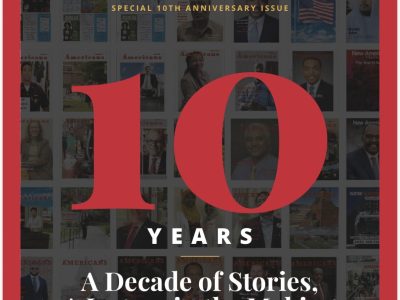
Ten years ago, a vision took shape—one rooted in the power of storytelling, representation, and the importance of giving communities a voice. Today, as New Americans Magazine celebrates its tenth anniversary, its publisher reflects on the journey from an ambitious idea to a decade-long publishing endeavor.
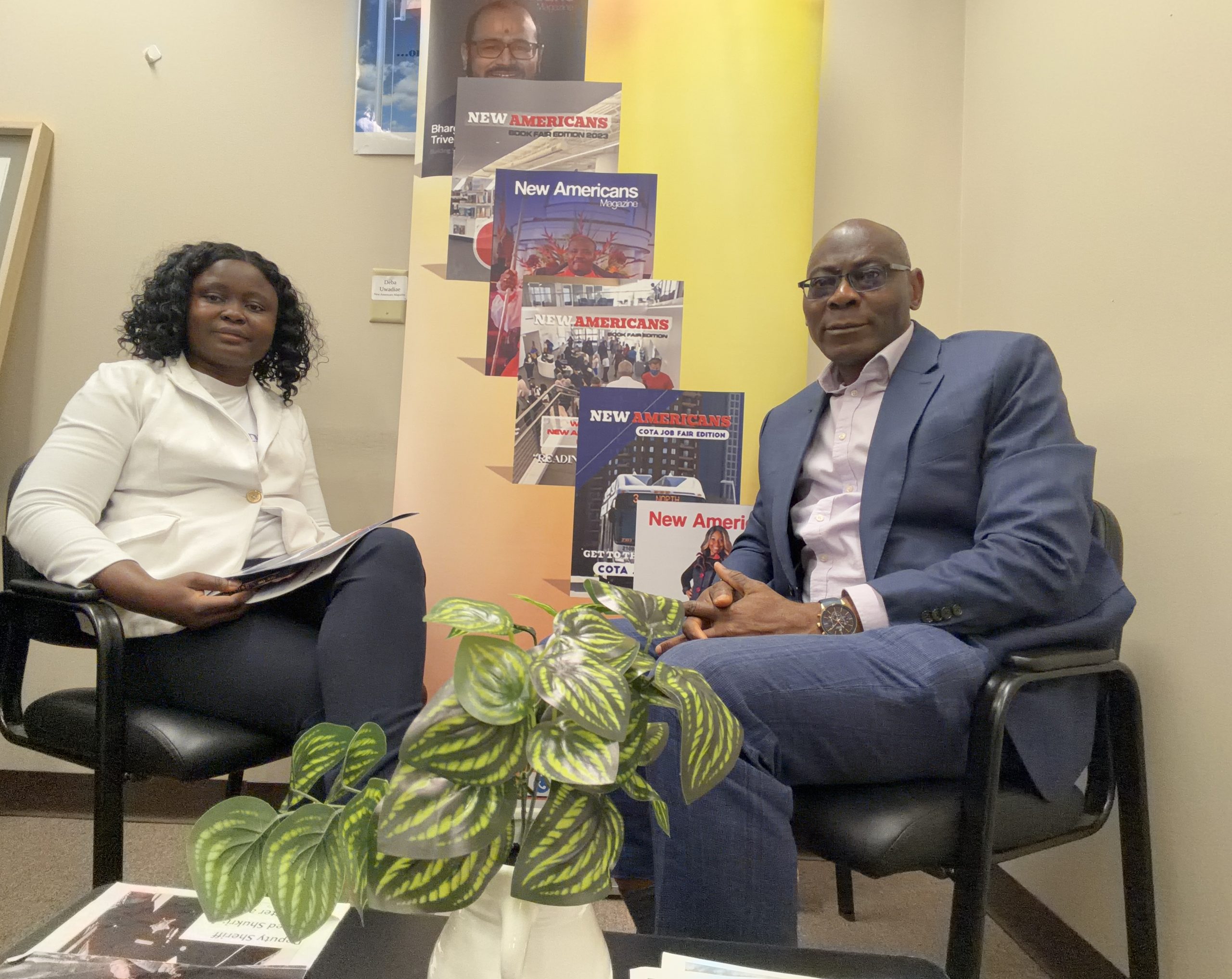
In this special anniversary interview, we explore the inspiration behind the magazine, the challenges and triumphs that shaped its growth, the impact of its storytelling, and the vision guiding its next chapter. More than a celebration of ten years in publishing, this conversation offers a look at the person behind the platform and the legacy he hopes to build for generations to come.
Shola Adebuga: First and foremost, a big congratulations on this beautiful and incredible milestone, because it’s not easy to hit a ten-year mark in publication or any business, especially with the current state of our world. Readers, join me on the ride.
Deba Uwadiae: Thank you.
Shola Adebuga: This milestone has been a decade of publishing stories worth celebrating, especially when it reflects the vision, perseverance, community, and impact of new immigrants in the society. Once again, congratulations.
Can you take us on the journey of when you started and what inspired you to establish New Americans magazine?
Deba Uwadiae: Thank you very much. New Americans magazine started in 2016, but the motivation to start New Americans magazine came from The Immigrant. I started publishing in Columbus, under the name of The Immigrant, an online publication in 2014. And we were using it to reach out to the new American, immigrant, refugee community.
So that was what I did with a partner for two years. After that, I decided to go into print. And because of my experience in the last two years prior to 2016, I knew that the community we were serving, the new American community, would prefer something in print.
It’s not that they don’t go online to read, but as of that time, we were sending the stories directly to emails. That was what we were doing. And we were getting responses throughout the day. But because of my interaction, I realized that we needed print.
At the time, I knew producing a print publication would be expensive, but I wanted to test the idea. I decided to rename and register the publication as New Americans magazine and move forward on my own.
We started with a four-page newsletter to see how people would respond. We chose July 4 as our launch date, and the first issue featured the headline ‘Fourth of July.’ That was how New Americans magazine began.
Shola Adebuga: Awesome. I love the name of the magazine, New Americans. It speaks for itself. You talked about the goal and the vision of the magazine, how has that vision evolved over the past decade?
Deba Uwadiae: That’s a good question. It has been a learning process throughout. As I mentioned, we started with The Immigrant, but we encountered several challenges. We noticed that the publication was not embraced by all communities, and we wanted something more that would make people feel inclusive.
Our goal was to help people understand and appreciate the immigrant experience while encouraging them to share their own stories. When the response was less welcoming than we had hoped, I thought, “We need a publication that everyone can embrace.”
That was how New Americans emerged. Initially, it was the magazine’s name, but its meaning goes beyond publication. It represents an idea: new Americans, new people, and new ideas.
Today, our focus is on immigrants and their stories, but the vision is broader. In the future, I see New Americans growing into an ideal that connects people through shared experiences and fresh perspectives.
Screenshot
Along the way, we have also encountered different perceptions of what it means to be a “new American.” Some immigrants who have lived here for years will say, “I’m not a new American.” Some people say, “I’m not a new American. That term is for people who only became citizens yesterday.” To them, the term may suggest someone who has only recently arrived or become a citizen. But I see it more broadly: even if you have been here for many years, being a first-generation American connects you to that experience. Encountering these perspectives has been part of our learning process.
Our vision continues to evolve. We want people to see New Americans magazine as an ideal that represents new people, new ideas, and new possibilities. One reader described it as “a movement,” and that is the direction we hope to grow.
These experiences and conversations have shaped our journey over the past ten years.
Shola Adebuga: Beautiful. We all know that starting a publication requires courage, a lot of resources, and a strong belief in an idea. What were some of the greatest challenges you faced in those early days?
Deba Uwadiae: Funding, funding, funding. That has always been our major challenge.
When we started in 2016, I was juggling two jobs alongside the publication. My background is in journalism. Before coming to the United States in 2011, I worked as a journalist in Nigeria with Vanguard newspaper. After leaving the newspaper, I spent 13 years in specialized publishing, initially covering the aviation industry before moving into business travel. I already have experience in publishing and transitioning from one title to another.
But experience alone does not pay the bills. When we launched in 2016, I knew I could not immediately go into publishing full time. I kept working other jobs, including a weekend position at Victoria’s Secret. That schedule gave me time during the week to build the publication, cover stories, and interview people.
With The Immigrant, our coverage focused primarily on immigrant communities. When we started New Americans, I knew we needed to reach a broader audience. I began covering government offices, businesses, the Statehouse, Columbus City Council, and other local councils. We wanted our stories to connect people across communities.
Knowing that funding would be a challenge, I held on to my weekend job from 2016 until 2023, when I finally moved into publishing full time.
One of the difficulties is that advertising support from the communities we serve has not reached the level we need. Advertising is essential to sustaining publication, whether in print or online. People may appreciate the stories and value the platform, but that appreciation does not always translate into advertising revenue.
Funding was a challenge at the beginning, and it remains a challenge today, especially now that I am doing this full time. Still, we have sustained the publication for ten years. We kept going, continued serving our readers, and made it this far. Having come through that journey gives me hope for what lies ahead.
Shola Adebuga: That’s a story of perseverance right there. Was there a defining moment when you realized that New Americans magazine was becoming more than just a publication and was making a meaningful difference in the community?
Deba Uwadiae: Yes, I’ll tell you a story. In 2017, I visited the Columbus Department of Neighborhoods to drop off copies of our latest edition—I believe it was the April issue. After leaving the office, I was sitting in my car when I received a call from the mayor’s office. The woman introduced herself and said the mayor would like to be interviewed for New Americans magazine.
My first reaction was, “Seriously?”
Having spent most of my adult life in Nigeria before coming to the United States, receiving that call meant a great deal to me. Here was the mayor of Columbus asking to be interviewed by our publication, just one year after we started. We had only recently expanded the magazine to 12 pages.
That was a defining moment. To have the mayor recognized our work and place that level of trust in us so early on our journey was incredibly encouraging. I remember thinking, “Wow, we must keep going. There’s no looking back.”
It reassured me that our work mattered and gave me the confidence to keep building.
Shola Adebuga: Were there any other accomplishments you would love to share?
Deba Uwadiae: One of our most significant moments was our coverage of the COVID-19 pandemic. That period helped shape what New Americans is today, especially our connection with the New American community.
When the pandemic became a global crisis in early 2020, people urgently needed reliable information. I was still juggling two jobs, including working weekends, but I recognized that keeping our community informed was essential.
The governor of Ohio held regular media briefings, and those of us covering the Statehouse received invitations and updates on developments across the state. The mayor also held briefings.
As both a publisher and a journalist, I could report and publish directly from those briefings. As soon as the governor made an important announcement, I would write the story and get it out to our audience. Other reporters often had to send their stories back to their newsrooms before publication. I could publish immediately and share the updates on Twitter and Facebook.
One day, a fellow journalist told me they were encouraged by how quickly I was breaking the news. That meant a lot to me. We were often reporting the same information, but our headlines and presentation mattered because they shaped how readers understood the story.
Being able to cover the pandemic from the shutdowns through the reopening was a defining experience. It was also when we discovered the power of WhatsApp for reaching our audience directly. We began building our contact database and creating community groups. We started with ten groups; today, we have 66, reaching people around the world. We now have at least 10,000 WhatsApp subscribers, and that number continues to grow.
2020 changed everything for us. We had to suspend our print edition because of the challenges, but we resumed printing in 2022. Despite those difficulties, we continued providing information when our readers needed it most. That is why I will always remember our pandemic coverage as one of our biggest moments.
Shola Adebuga: In your opinion what stories about new Americans still require greater visibility in mainstream media and how can your publication help tell them?
Deba Uwadiae: There are so many positive contributions in our communities that deserve attention. Too often, someone’s background becomes a headline only when something goes wrong. When that person succeeds, they are described simply as American. But when they commit an offense, suddenly they become “Nigerian American or Somali American.” Their country of origin becomes part of the story in a way it wasn’t when they were doing something good.
I believe the media should be more intentional about highlighting those positive stories. Who is working in the medical field? Who is making a difference in education? What about someone who arrived just two, three, or five years ago and is already contributing to the community?
We have people establishing nursing schools and expanding educational opportunities. We also have teachers doing excellent work in classrooms and entrepreneurs opening grocery stores that serve their neighborhoods. We should not wait until someone becomes widely successful before recognizing their contribution. Those everyday achievements deserve coverage, too.
Every media organization has its own editorial priorities and approach, which may influence the stories it covers. But I think there is room to broaden that coverage.
For example, newsrooms have foreign desks dedicated to international affairs. Why not have diaspora desks, with journalists specifically assigned to cover immigrant communities and their contributions? Their role would be to go into those communities, find out who is doing what, and tell those stories consistently.
That kind of intentional coverage would help people see and understand one another better. It would encourage not only the New American community, but the whole society.
Shola Adebuga: I agree, shoutout to Felbry college of nursing we are so proud of you. How has building New Americans magazine changed you personally both as an entrepreneur and as a community leader?
Deba Uwadiae: As a journalist, the community expects you to be above reproach. We are human, but our profession requires us to be especially conscious of our conduct, our fairness, and the trust people place in us.
In politics, for example, you must be fair to all sides. If people consistently see you associating with one side, they may begin to question your impartiality. You have to be mindful of your relationships and how they might affect public confidence in your work.
Being a community leader brings another layer of responsibility. People trust you, and they turn to you for help. I receive calls all the time from people asking, “I need social assistance. Can you help me?” Others might say, “I read about someone who does carpentry in your magazine, but I didn’t keep the contact information. Can you connect me?”
At that point, you are more than a journalist. You become a community advocate and someone people rely on to help them find information, resources, and support.
Balancing those responsibilities can be challenging. It requires discipline, sound judgment, and integrity. Your actions can either strengthen people’s trust or undermine it. When a community has placed its confidence in you, you have a responsibility to honor that trust.
Shola Adebuga: If you could sit down with the person you were 10 years ago just before launching the magazine, what advice would you give him or anyone starting out?
I would always tell anyone “Look you must have a regular income. You must have a regular income to be able to sustain you and even the publication” because I’ve had instances where I had to go into my savings just to produce, especially when you print. If it’s online, fine but even online you still must maintain the website, you still pay monthly or annually depending on the payments plan. You just need to have a sustainable source of income for yourself before you can really drive that idea.
Secondly, you must have a niche. Is it general interest? Is it a specialized interest? Specialized interest you have this niche where you cover so you are focused on that 100%, it can be less stressful but if it’s a general interest like we do, it’s very challenging but that’s why I say funding is very important. Also, you need to be outspoken, don’t just keep what you are doing to yourself, tell people what you’re doing and fortunately in this environment they ask, “how is it going?” Be open about it, it’s good. Funding is tough and so people will give you ideas. There are people who will tell you why not try this or why don’t you meet this person? So, 10 years back that is the position I’m taking.
Shola Adebuga: What kind of legacy do you ultimately want the New Americans magazine to leave and what would success look like when the publication celebrates its 20th anniversary?
Deba Uwadiae: I want to see a publication that is bigger than me, Deba Uwadiae but a publication that stands on its own. A publication that has journalist correspondents in different states, a publication with white house correspondents, a publication that people can download the app and have it on their phone and a publication that people can mention anywhere. Like we mention Time magazine. Those are what I’m looking at for the next 10 years. I can look back and say yes, we’ve taken this publication to a greater height.
FIRECHAT
Favorite story you ever published
Saraga story. It was my favorite story, and it went viral. It was everywhere, not just in Columbus. It went beyond America.
Best advice you’ve ever received?
Don’t stop, we are with you by Dr. Seleshi Asfaw of ETSS.
One word to describe the first 10 years
Worth it! Worth the sacrifice
One word for the next one
Positive
Support the New Americans magazine to continue to serve our community with precise news that affect the new American, immigrant and refugee community. https://paypal.com/donate/?hosted_button_id=8LHFS78NRNJJY&source=url