By
By Bishnu Luitel, Harrisburg PA
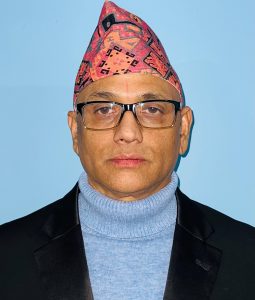
Bishnu Luitel
The Bhutanese refugee crisis and the plight of political prisoners in Bhutan have remained unresolved for more than three decades, constituting a serious human rights and humanitarian concern. With the prime ministers of Nepal and Bhutan in New York to attend the 81st Session of the United Nations General Assembly, human rights organizations have urged both governments to use the occasion to address these issues without further delay. United Nations General Assembly will be held On September 22nd to 28th 2026 at New York, USA.
The Global Campaign for the Release of Political Prisoners in Bhutan (GCRPPB) and the Bhutan Independent People’s Forum (BIPF) issued a joint statement calling for a Permanent solution to the Bhutanese refugee crisis and the unconditional release of Bhutanese political prisoners. The statement, issued by GCRPPB founder and Global Coordinator Ram Karki and BIPF General Secretary D.B. Subba, expressed grave concern over the condition of Bhutanese political prisoners who have remained incarcerated for many years.
According to the statement, although Chaturman Tamang and Hasta Bahadur Rai were released in June 2026, a Human Rights Watch report indicates that 28 Bhutanese political prisoners remain confined in various prisons. The human rights organizations have called on the Government of Bhutan to release all remaining political prisoners immediately and unconditionally. They have also demanded that, following their release, the former prisoners be provided with the legal documentation and practical assistance necessary to reintegrate into ordinary civilian life.
The statement noted that the presence of the prime ministers of Nepal and Bhutan at the same international forum presents an important opportunity to advance dialogue on these long-unresolved issues. Nepalese Prime Minister Balendra Shah has been urged to raise the issues of the refugees and political prisoners consistently during his meeting with Bhutanese Prime Minister Tshering Tobgay. Similarly, Prime Minister Tobgay has been called upon to take concrete steps toward the repatriation of Bhutanese refugees living in Nepal and the release of Bhutanese political prisoners.
The Bhutanese refugee crisis arose primarily after large numbers of Nepali-speaking Bhutanese were expelled from Bhutan in the late 1980s and early 1990s. Displaced from their country, they were forced to seek refuge in camps in the Jhapa and Morang districts of eastern Nepal. As part of efforts to address the plight of refugees who had spent many years living in the camps, more than 113,000 Bhutanese refugees were resettled in eight countries—including the United States, Canada, Australia, and New Zealand—with the assistance of the Office of the United Nations High Commissioner for Refugees (UNHCR) between 2007 and 2016.
However, third-country resettlement has not fully resolved the Bhutanese refugee crisis. Approximately 7,000 Bhutanese refugees remain stranded in camps in Nepal. Many of them wish to return to Bhutan, the country of their birth and ancestral homeland. The human rights organizations’ statement emphasized that effective and meaningful bilateral dialogue between Nepal and Bhutan is necessary to address their desire for repatriation.
To that end, the organizations have called for the establishment of a voluntary, safe, dignified, and orderly repatriation process for refugees who wish to return home. They have also stressed the need to ensure their safe reintegration following their return, the protection of their civil rights, and the necessary legal and administrative arrangements.
Overall, the joint statement makes clear that the Bhutanese refugee crisis is not merely an event of the past, but an unresolved human rights and humanitarian issue. It calls for the refugees’ right to return home and the freedom of political prisoners to be advanced as important items on the Nepal–Bhutan bilateral agenda. Human rights organizations have urged the two governments to use the high-level contact between their prime ministers during the United Nations General Assembly as an opportunity to initiate substantive dialogue and move toward resolving these issues, which have remained outstanding for three decades.
It is regrettable that the governments of Nepal and Bhutan have failed for years to address seriously the fundamental demand for the repatriation of Bhutanese refugees. From the outset, Nepal should have exerted effective diplomatic pressure on Bhutan and taken the initiative to ensure the safe, dignified, and voluntary return of refugees wishing to go back to their own country. Instead, prioritizing third-country resettlement as the principal solution strengthened a path that made their displacement permanent rather than resolving the underlying problem.
Although third-country resettlement provided new opportunities for many refugees, it must not displace their right to return home. Both countries must now abandon further delay and address this historical injustice through clear political commitments and results-oriented diplomatic action.
Support the New Americans magazine to continue to serve our community with precise news that affect the new American, immigrant and refugee community. https://paypal.com/donate/?hosted_button_id=8LHFS78NRNJJY&source=url