

























By Okon Ekpenyong
A handful of Ohio House Republicans, including Rep. Josh Williams, called for the State of Ohio Auditor’s office and the Department of Youth and Family Services to immediately open an investigation into all Central Ohio daycare facilities suspected of fraud.
This is stemming from the ongoing federal fraud investigation in the State of Minnesota. But one Columbus resident says, “They’ve gathered 42 signatures but present no evidence: It is nothing but a Political Attack on Ohio’s Refugee Daycares.”
Another Columbus resident, an architect who has helped design a few nursing facilities, says that “Most facilities are compliant, but inspections will uncover some outliers. While violations exist, they often involve recordkeeping errors, similar to those found in nursing homes, and are typically addressed promptly. Cases of intentional fraud are rare and usually result in swift shutdowns.”
According to a CBS News report, more than 90 individuals have cases against them: some have led to convictions, some have pending cases charged but not convicted, and the report says some of the fraud schemes are worth hundreds of millions of dollars, making it one of the most reported fraud investigations in Minnesota.
“We need round-the-clock, unannounced inspections of all childcare facilities that receive public dollars to ensure that not a single Ohioan’s tax dollars are stolen. What’s happening in Minnesota is almost certainly happening in Columbus —and Ohio needs to use every power we have under the law to put a stop to it,” Williams said.
Just before the end of 2025, Ohio Governor Mike DeWine issued a statement detailing his administration’s efforts to implement measures to address potential fraud in the state.
Ohio Governor Mike DeWine emphasized that the state has robust anti-fraud measures in place for its publicly funded childcare system amid concerns about potential fraud in Minnesota. DeWine notes that Ohio pays facilities based on attendance, not enrollment, and verifies attendance through PINs with photo confirmation or QR codes. In 2025, DCY received 124 referrals, resulting in 61 programs repaying overpayments and 12 closures. DeWine’s office is highlighting these safeguards amid lawmakers’ calls for investigations into daycares in the Columbus area.
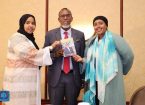
MOHAMED-BURRHAN AFMEGED, a resident of Columbus, responds after learning about the request for an investigation here in Central Ohio.
“They’ve gathered 42 signatures but present no evidence: The Political Attack on Ohio’s Refugee Daycares,” Afmeged said.
Community Impact:
In clinical practice, we measure protective factors that buffer families from mental health crises. These centers serve as informal grief support networks, with parents stating, “They’re the only place I can leave my child where I know they’ll be emotionally safe.” Providers who’ve experienced conflict understand trauma and often extend care beyond contracted hours, offering meals and support to grieving families. This reflects community mental health infrastructure at work, beyond what’s outlined in state licensing manuals.
Note: Based on direct clinical observation, not a statistical study.
Ramifications of Investigations:
Re-traumatization occurs when refugees fleeing persecution see state investigators in their safe space, triggering survival trauma. The Ohio Department of Job and Family Services has not documented systemic fraud among Columbus refugee providers. Mimicking failed tactics from previous cases harms refugees psychologically for political gain.
Fact: ODJFS has issued no public report of widespread fraud. The letter itself uses “almost certainly,” not documented cases.
Evidence Standards:
In behavioral health, we don’t treat symptoms that don’t exist. You don’t launch community-wide interventions because a failed investigation playbook used elsewhere found termites in one house. If you have proof of fraud in Columbus, bring charges. If you don’t, you collaborate, not investigate. The standard is documented cause, not demographic resemblance. It is an analogy based on medical ethics, not a legal claim.
If Fraud Exists:
Handle it like any community health issue: transparently, proportionally, and with support. One fraudulent provider? Charge them specifically. But you don’t raid dozens of centers. You don’t issue press releases that cast entire communities as suspects. The Ohio Attorney General’s office can confirm whether any refugee-owned daycare in Columbus faces fraud charges. To date, none have been filed.
Verification: No public fraud charges against Columbus refugee-owned daycares found in OAG records as of this date.
Building Trust:
Trust is built through invitations, not investigations. Before you send inspectors, you send collaborative partners. Refugee resettlement agencies like US Together and Community Refugee & Immigration Services have documented success with this model. Ask: “What do you need to meet compliance?” not “What are you hiding?” Provide language-accessible resources, not surprise raids. The question isn’t “How do we catch them?” It’s “How do we help them help Ohio families?”
Citation: US Together and CRIS are established Ohio refugee support organizations with proven collaborative programs.
Educational Outreach:
Lead with the data: Ohio’s licensed childcare providers maintain compliance rates above 95% annually, per ODJFS audit reports—frame misconduct as the rare exception, not the community rule. And deliver every message through trusted community partners, not politicians who’ve already seeded suspicion. Education without trust is just another form of trauma.
Fact-check: ODJFS annual reports consistently show compliance rates between 93-97% for licensed providers statewide.
Legislators Role:
Their role is to protect mental health, not assault it. If they want accountability, fund trauma-informed training through programs like OhioMHAS. Increase reimbursements so providers can afford compliance. Show up at community meetings, not just press conferences. Accountability without compassion is just bullying in nicer clothes.
Citation: OhioMHAS (Ohio Department of Mental Health and Addiction Services) offers community training grants.
Future of Refugee Services:
These investigations signal that refugee services are tolerated until they are politically valuable for attack. But here’s what gives me hope: Somali refugees have built critical infrastructure in Ohio for 30+ years despite every obstacle. They’ll survive political theater. The question is whether Ohio’s families will survive without them.
Fact: Somali refugee resettlement in Ohio dates to the early 1990s, with established community institutions.
Support for Families:
First, pause the investigations until there is evidence. Second, deploy mobile mental health teams; the Ohio Department of Mental Health funds these. Third, create a rapid-response fund for families who lose care due to political stunts. You don’t get to destroy a safety net and then lecture about well-being.
Fact: OhioMHAS mobile crisis teams are established and could be redirected.
Long-Term Solutions:
Stop investigating communities and start investing in them. Fully fund childcare subsidies so providers aren’t on razor-thin margins. The Ohio House could allocate existing ARPA funds for this today. Fund compliance training. And make it an ethics violation to launch community-wide investigations without documented cause. Accountability starts at the top.
Fact: Ohio has unspent ARPA (American Rescue Plan Act) funds available for childcare infrastructure.
Support the New Americans magazine to continue to serve our community with precise news that affect the new American, immigrant and refugee community. https://paypal.com/donate/?hosted_button_id=8LHFS78NRNJJY&source=url









Leave a Reply
You must be logged in to post a comment.