 By
By Positive Effort from Darjeeling Toward Bhutanese Political Prisoners
By Bishnu Luitel, Harrisburg, Pennsylvania
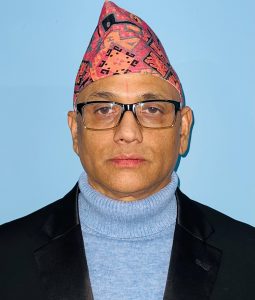
Bishnu Luitel
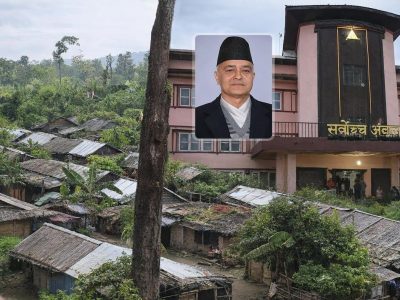
The elected representative of Darjeeling, Ajay Edwards, recently wrote an open letter via social media to Bhutan’s King Jigme Khesar Namgyel Wangchuck, appealing for the application of the principle of “Amnesty” for the release of Nepali-speaking Bhutanese political prisoners.
Edwards, who is an elected member of the Gorkhaland Territorial Administration (GTA) Sabha and also the president of the Indian Gorkha Janshakti Front, appears to have taken this step not merely as a political statement but as a courageous initiative connected to the question of human rights and moral responsibility. The said open letter was written particularly after the news of the death of Sah Bahadur Gurung in custody became public.
Gurung had been arrested in the 1990s on the charge of participating in a peaceful movement demanding human rights. He was charged with treason and sentenced to life imprisonment. The death of Gurung, who had spent 35 years in prison in a chronically ill condition, inside Chemgang prison near the capital, has raised serious questions about the condition of political prisoners in Bhutan.
The 1990s: A Chapter of Discrimination and Displacement
The 1990s is recognized as a sensitive turning point in Bhutan’s history. Strict citizenship provisions, especially the 1985 policy implemented with 1958 as the base year, and the subsequent repression had a serious impact on the Nepali-speaking Bhutanese community known as “Lhotshampa”. Hundreds of thousands of people were displaced; many were forced to live as refugees. During the reign of King Jigme Singye Wangchuck, who was on the throne at that time, there are allegations that those who demanded human rights were subjected to severe repression.
Various reports mention incidents of arrests, torture, deaths in custody, and enforced disappearances. Such incidents have also raised questions about Bhutan’s democratic transformation process.
The sad history of many Bhutanese citizens having faced harsh state repression and persecution from the 1990s to the present simply for demanding human rights is evidenced by various incidents. Citizens who peacefully stood in favor of their fundamental rights were suppressed by the force of guns and batons; many lost their lives there.
On October 28, 1990, at Lamidanda Dungkhag of Chirang, Daso Dungpa Damchu Lendup used an army rifle to kill Tek Nath Adhikari, Guman Singh Khadka, Dev Narayan Adhikari, and Prem Dorji Tamang, clearly illustrating the nature of the violent repression at that time. Dozens were injured, but the families of the deceased have not received the bodies of their loved ones to this day and were deprived even of the right to perform their last rites.
The incident in which the country’s Deputy Home Minister, Dago Tshering, killed 17-year-old Tanka Pathak is even more heartbreaking. Punya Prasad Dhakal of Dagana was arrested in November 1990 and taken to Chemgang prison, where in July 1991 his family received news that he had been beaten to death. His body was not handed over to the family.
Similarly, many names such as Block Mandal, Dharma Raj Gurung of Gosi block, Block Mandal, Bhakta Bahadur Pokharel of Neuli Dalim block, Man Bahadur Mothe Darji of Neuli Deklai Magare village, Tshering Tamang of Chirang, Tikaram Dulal of Gelephu, and Khadananda Humagai represent this painful history.
Some are said to have been killed in Dadimkha jail and their bodies disposed of at unknown locations; even their families were not informed.
These incidents are not confined only to the pages of history. Even after 35 years since 1990, many political prisoners are still enduring harsh prison lives. Although some were fortunately released, they are completely deprived of civil rights. According to a 75-year-old former political prisoner who was released after spending seven years in Chemgang jail, even after release his land was not returned, he was not given a passport, and he is not permitted to travel abroad. In old age, he is not allowed to go anywhere even for pilgrimage. He stated that he has been compelled to live like a refugee within his own country and to spend the remainder of his life under surveillance, which has become a harsh fate in the later part of his life.
The death of Sah Bahadur Gurung in Chemgang prison on December 15, 2025, has once again reopened old wounds. If an impartial investigation were to be conducted into the incidents that occurred since the 1990s, it can be assumed that many series of brutal repression and inhumane treatment might be exposed.
Bhutan, known as the land of Buddha, places supreme value on compassion, mercy, and forgiveness. However, the practice of not even informing families of prisoners who are in ill condition, not handing over bodies after death, or making them disappear raises serious moral questions.
The example of Buddhist monks who recently completed a 110-day “Walk for Peace” in the United States is noteworthy. During their two-thousand-mile journey, they conveyed to the world the message of peace, harmony, and coexistence. This proves how meaningful the path of Buddhism and non-violence can be for world peace.
In contrast, the harsh treatment of its own citizens by the royal government in Bhutan shows a barrier and distance between compassion and justice. Peace and reconciliation cannot be achieved merely by slogans; for that, acknowledgment of historical wounds, impartial investigation, and humane treatment are indispensable—areas in which the royal government appears to have fallen short to this day.
The Question of Compassion and “Gross National Happiness”
Bhutan is recognized on the world stage for the concept of Gross National Happiness. However, if it fails to ensure the fundamental rights, justice, and humane treatment of its own citizens, this concept may fall under criticism. For Bhutan, known as the land of Buddha that preaches compassion, mercy, and non-violence, sympathy and just review toward political prisoners is naturally expected.
In his letter, Ajay Edwards has argued that the constitutional authority to grant or reduce sentences rests with the King, and that the exercise of mercy does not weaken justice but rather strengthens the conscience of the nation. This appeal is not the language of interference; rather, it is a humble request made in favor of human values and historical reconciliation.
Silence of Neighboring Regions and Moral Responsibility:-
Nepali-speaking majority regions such as Darjeeling, Sikkim, and the Dooars are geographically and culturally close to southern Bhutan. However, in the past three decades, leadership from these regions has rarely been seen raising their voice openly about discrimination against the Nepali-speaking community in Bhutan. The silence of neighboring societies sometimes becomes a cause for injustice to become prolonged.
Issues such as human rights and minority rights do not remain confined within the borders of a single country; they are linked with universal human values. Therefore, this voice raised from Darjeeling can be taken as a positive beginning in regional and international discourse.
Ultimately, Ajay Edwards’ initiative may be an opportunity to begin a new debate regarding Bhutanese political prisoners. The condition of prisoners who have spent more than three decades in jail, issues related to citizenship and fundamental rights, and incidents of deaths in custody demand impartial investigation.
Compassion and justice are not opposites of each other. Rather, justice rooted in compassion can open the door to long-term peace and reconciliation. If Bhutan wishes to strengthen its international image and the core essence of Buddhist philosophy, undertaking a humane review regarding political prisoners would be a timely step. The voice raised from Darjeeling is not only for regional politics but a positive signal for overall human rights awareness.
Support the New Americans magazine to continue to serve our community with precise news that affects the new American, immigrant and refugee community. https://paypal.com/donate/? Dr;/.hosted_button_id=8LHFS78NRNJJY&source=url