 By
By By Okon Ekpenyong
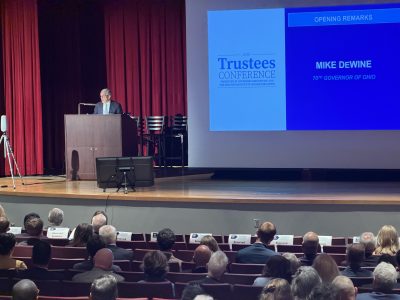
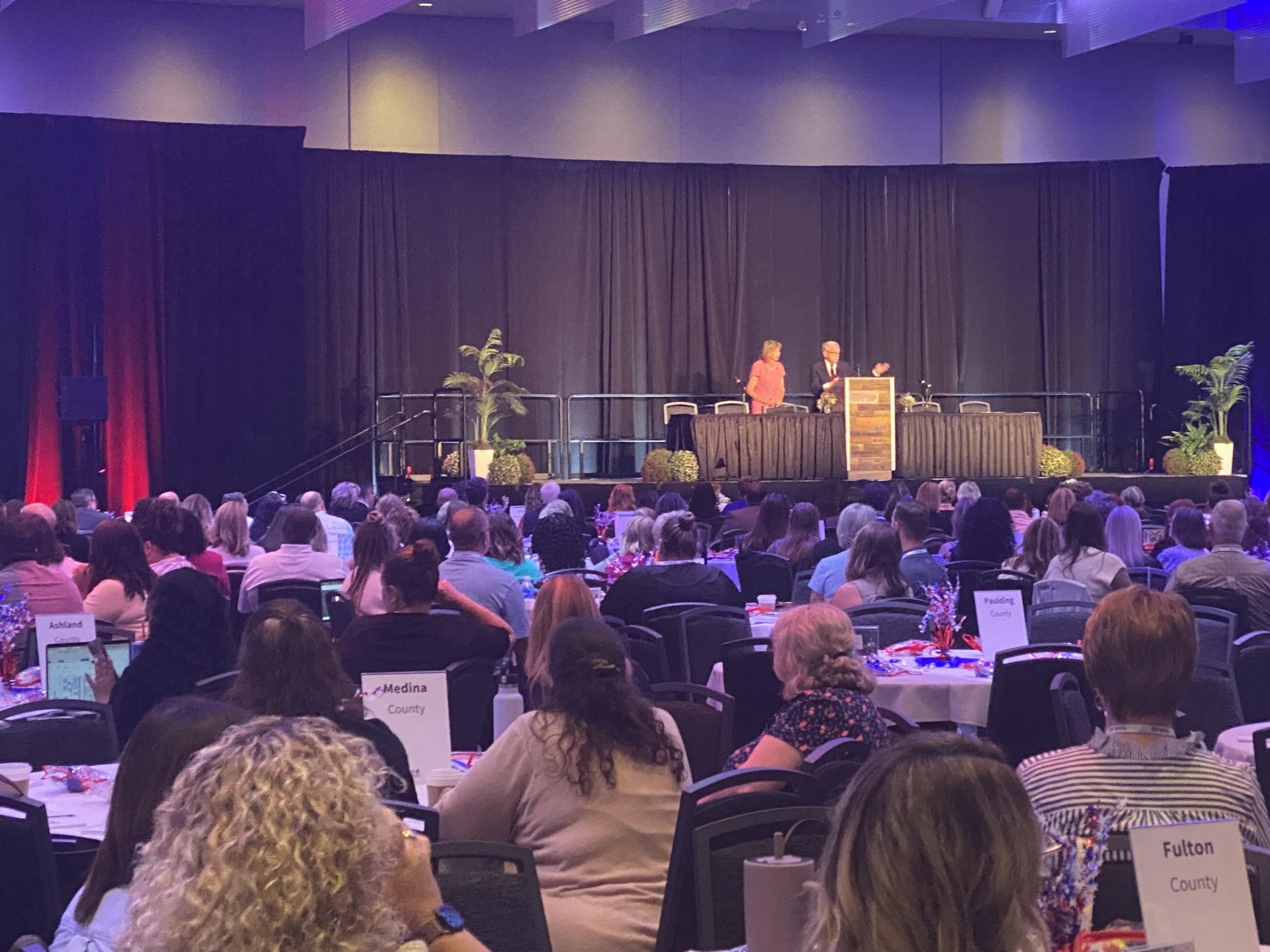
Ohio Governor Mike DeWine joined LifeTown Columbus officials, Whitehall City Schools leaders and researchers from Miami University, DeWine’s alma mater, on Tuesday, September 15, 2026, came together to unveil Super Buddy, an AI-powered educational hologram designed to reinforce learning through student interaction.
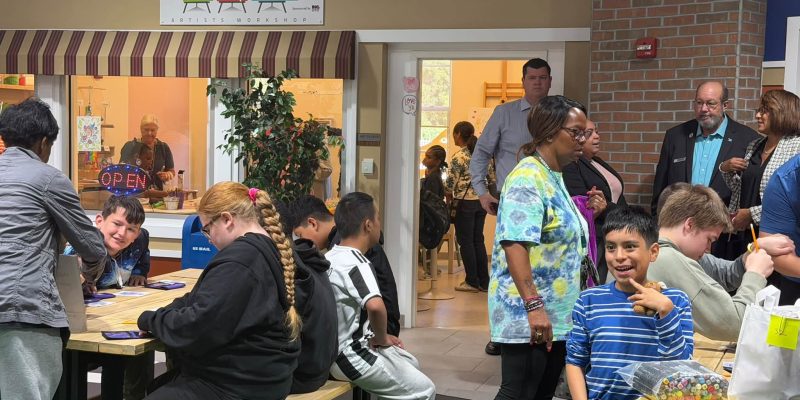
LifeTown Columbus operates a 5,000-square-foot simulated community where students with special needs practice life, social and job skills. LifeTown partners with Whitehall City Schools, while Miami University researches how Super Buddy can improve student engagement, comprehension, and learning.
During Tuesday’s demonstration, Super Buddy explained that its role is not simply to provide children with answers. After students explore LifeTown, the AI asks them to teach it what they learned about making good choices, making friends, and handling difficult situations.
“I’m not the teacher. The children are,” Super Buddy said. “They pause, think, and then they teach me. That’s called real learning.”
“When children teach, they don’t just remember a lesson,” Super Buddy continued. “They begin to live it.”
Sasha, a student participating at LifeTown, showed the audience how students can interact with Super Buddy. She explained a strategy for completing reading assignments: stop and think, read each line carefully, answer the questions, and then check whether the answers are correct.
Super Buddy responded before the conversation shifted to procrastination, with the AI character saying, “Tonight I’m going to stop putting it off and start my report. No more tomorrows.” The exchange demonstrated the learning model behind the technology: instead of having AI provide answers, students process information and explain what they have learned back to the AI.
According to Sasha’s mother, her daughter couldn’t stop praising how interactive Super Buddy was. She also credited LifeTown with creating a space where her daughter and other students can practice important life, social, and pre-employment skills in various themed rooms. Students can visit spaces such as Uncle Glenn’s Animal Friends, Betty’s Beauty Shop, the Teeny Family Deli, Fit For Life Medical Center, and Huntington, where they can practice advocating for themselves in real-life scenarios.
LifeTown Executive Director Rabbi Areyah Kaltmann dedicated the project to the memory of his friend Ben, describing the technology as a way to help young people recognize their own worth.
“Your life has infinite value,” Kaltmann said. He said one way to honor Ben is “by helping another child discover just how valuable every one of you is.”
According to Ben’s mother, her son understood some of the challenges students at LifeTown face. With LifeTown’s help and Kaltmann’s support, she said, “Ben was happy to start working to become a better version of himself.”
Whitehall City Schools Superintendent Dr. Sharee Wells said students who experienced the technology returned with critical questions and reflected on what they learned. Wells thanked DeWine for his investment and commitment to children and recognized Kaltmann and his family, the Miami University research team, and Whitehall board members who helped support the project.
“AI is our kids right now and is our kids’ future,” Wells said. “And so to be able to use it in a way that’s so powerful and meaningful and proactive to keep them safe and to empower them, we are more than happy to be a part of it.”
According to information released by DeWine’s office ahead of Tuesday’s unveiling, Miami University clinically tested the AI with fifth-grade students from Whitehall City Schools and found that it increased students’ cognitive engagement with the material and their likelihood of continuing to learn voluntarily.
Dr. Yue Li, associate director of the Discovery Center for Evaluation, Research, and Professional Learning within Miami University’s College of Education, Health and Society, said researchers conducted two rounds of pilot studies involving an earlier version of the AI character known as Mia. “I think the difference is active learning versus passive learning,” Li said.
Li said the research included English learners and students with special needs. She also said the technology can communicate in multiple languages, giving Spanish as an example of how the AI can adjust to an individual student. The multilingual capability could be especially relevant for immigrant and New American families whose children are learning English or have other educational needs.
According to the research team, about 71% of students working with Super Buddy chose to participate in additional study after completing their original task.
The research comes as Ohio continues investing in learning strategies, including implementation of the Science of Reading. Speaking with reporters after the unveiling, DeWine first discussed Ohio’s newly released 2025-26 School Report Cards, which showed statewide English language arts proficiency reaching a five-year high.
Students with disabilities also posted gains, with English language arts proficiency increasing from 21.3% to 22.4% and mathematics proficiency increasing from 20.6% to 21.6%.
Whitehall’s partnership with Miami University provides another opportunity to examine whether tools aimed at strengthening cognitive engagement and comprehension can complement existing efforts to improve student outcomes in language arts and mathematics.
Early research does not show that Super Buddy raises standardized test scores, but researchers found increased cognitive engagement among participating students.
DeWine described Super Buddy as an example of what he considers a positive use of artificial intelligence with young people.
“This is a good use, a positive use of AI, a use that is controlled by humans, humans setting clear boundaries,” DeWine said.
He said the technology focuses on teaching resilience, self-confidence, self-worth, and other positive skills.
“We want every child in the state of Ohio, no matter where they live, who their parents are, what ZIP code they live in, we want everybody to be able to live up to their given potential,” DeWine said.
Wells said Whitehall is looking beyond the immediate experience to what the technology could mean for more young people.
“We’re excited for all the impact that this is going to make not only for our kids but for many kids across the nation,” Wells said.
Support the New Americans magazine to continue to serve our community with precise news that affect the new American, immigrant and refugee community. https://paypal.com/donate/?hosted_button_id=8LHFS78NRNJJY&source=url