 By
By By NCUS TEC News
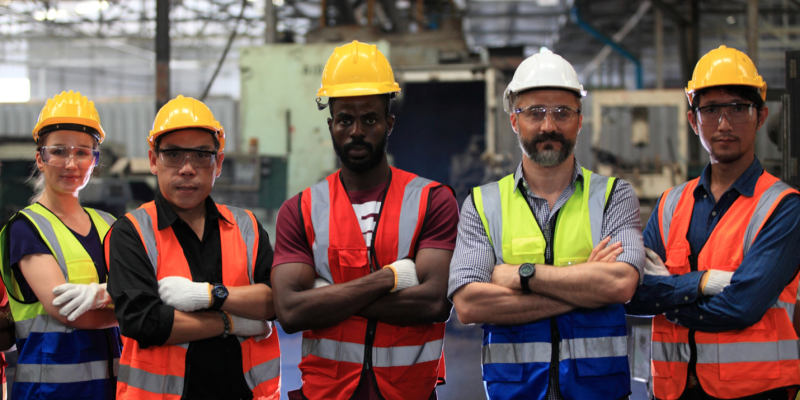
For decades, the strength of American manufacturing was measured in steel tonnage, square footage and capital expenditure. Expansion meant new facilities, equipment and technology.
Today, industry leaders say that equation is incomplete.
According to the Manufacturing Institute and Deloitte report, up to 3.8 million new jobs are needed between 2024 and 2033, with 1.9 at risk of going unfilled due to the skills gap.
“If we were to break the challenges into three buckets, they would be sorted into attrition, perception and the skills gap,” said Gardner Carrick, chief program officer for the Manufacturing Institute.
The skills gap, however, is the most immediate constraint.
“Investments in human capital matter just as much as equipment and facilities,” Carrick said.
“Without skilled workers to operate and maintain it, a new machine isn’t a smart investment.”
A highly productive workforce determines whether manufacturers can translate investment into output.
“The skills shortages could result in delayed or cancelled investments,” Carrick warned.
The implications extend beyond hiring difficulty. Capital without capability becomes risk. Even the most advanced equipment and machines require skilled workers to operate and maintain them at the highest efficiency. Without a properly trained workforce to power the shop floor, manufacturers cannot invest with confidence.
That reality is increasingly shaping how financial institutions think about growth. At JPMorganChase, workforce development is viewed as a vital component of economic infrastructure.
“We believe workforce development is a critical part of the broader economic infrastructure needed to support growth in advanced manufacturing,” said Opal Brant, Vice President and Program Officer of Global Philanthropy at JPMorganChase.
“A strong job market is the foundation of a strong economy, and we’re committed to transforming how we prepare the workforce for well-paying jobs and successful careers.”
While the workforce challenge is national, execution happens locally and regionally.
“NCUS TEC, National Center for Urban Solutions is a community-first organization with strong local connections and a holistic approach to supporting residents,” said Brant. “They are also an important part of our workforce strategy because NCUS TEC’s work directly supports Central Ohio’s advanced manufacturing expansion.”
NCUS TEC has locations in Toledo, Lima, and Youngstown, strengthening workforce pipelines in economic ecosystems that are less developed. Since 2021 the organization has had more than 500 individuals earn credentials in advance manufacturing with 84 percent of them receiving job placement. The technical institution offers a two-year associate’s degree in applied science.
“We train people to directly support production in the industries that are expanding,” said Perry Gregory, president of NCUS TEC. “At NCUS TEC, we’re partnering with employers and building talent pipelines across the country, including Pittsburgh and Philadelphia, where advanced manufacturing and energy production are expanding.
In Ohio, the Ohio Department of Job and Family Services has emphasized workforce alignment as a key pillar of the state’s economic strategy.
Lt. Governor Jim Tressel is leading these efforts through the initiative WorkOhio, which connects job seekers with training and workforce development programs.
“WorkOhio serves as a ‘front door’ to Ohio’s entire workforce ecosystem,” said Tressel.
NCUS TEC is a key partner in Lt. Governor Tressel’s workforce development strategy.
“Advanced manufacturing is one of the highest-demand industries in these regions, and partners like NCUS TEC help ensure job seekers are connected to the right training, credentials, and career pathways to meet that demand,” said Lt. Governor Tressel.
The WorkOhio program is organized into seven regional job hubs covering the state. These job hubs work alongside trusted local partners called “community connectors” like NCUS TEC to help job seekers discover opportunities in advanced manufacturing and other high-growth industries that are critical to Ohio’s future.
That employer-aligned workforce model has also expanded beyond advanced manufacturing into other infrastructure-driven industries. In Columbus, Google partnered with NCUS TEC to support the company’s Google STAR fiber optic training program, using a workforce development approach centered on industry demand and hands-on training.
The partnership has supported NCUS TEC’s expansion into Oklahoma and Arizona, where the organization will prepare workers for Google’s growing fiber optic infrastructure efforts. Google has contributed more than $2 million to support NCUS TEC’s programming and expansion efforts.
Workforce development is now economic infrastructure, the connective tissue between capital deployment and productive output.
What once was measured in steel, square footage, and capital investment is now equally defined by the strength of the workforce that turns that capital into production.
Support the New Americans magazine to continue to serve our community with precise news that affect the new American, immigrant and refugee community. https://paypal.com/donate/?hosted_button_id=8LHFS78NRNJJY&source=url