 By
- How one grandmother’s concern became a mission to reconnect generations through language, culture, and technology.
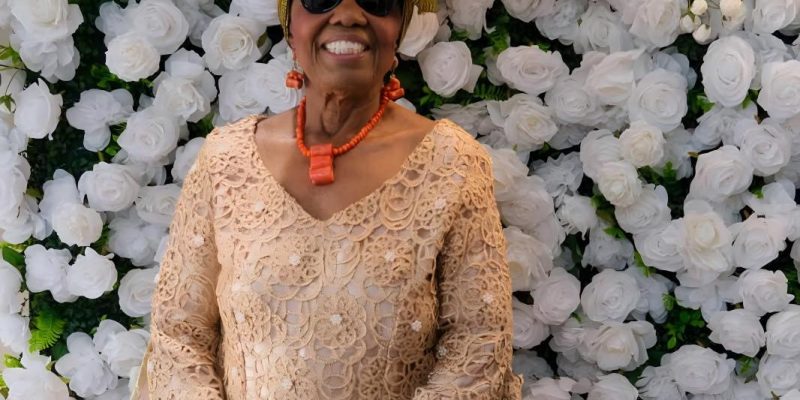
Professor Egondu Rosemary Onyejekwe, PhD is a Nigerian-born educator, author, entrepreneur, community leader, and native Igbo speaker based in Columbus, Ohio who has decided to take up the challenge of language transmission from generation to generation. Her experience has ignited a passion to ensure that every parent and grandparent, deliberately and intentionally, participate in the process of learning the language, living the culture and leaving the legacy.
Introduction
I have a PhD in Communications and four master’s degrees (in Zoology, Health Education and Public Health Administration), as well as a Master of Science in Systems Engineering, specializing in Artificial Intelligence and Neural Networks. Over more than 25 years in educational technology, I have explored how technology can make learning more accessible and meaningful. My journey has included serving as Contributing Faculty in Health Informatics at Walden University; public health work with the Ohio Department of Health and the School of Public Health, College of Medicine, at The Ohio State University; serving as Director of Emerging Technologies at University Technology Systems at The Ohio State University; international consulting with the World Health Organization’s Health Metrics Network across Africa; and service as a Visiting Professor in Health Informatics at the Federal University of Technology, Owerri, Nigeria. But beyond my professional accomplishments, I am a mother of four, a grandmother of eight, and a proud Igbo woman who believes deeply in the power of education, family, culture, and the bonds between generations. Today, I am the Founder and President of Naija Learning, an Ohio registered brand of GenLuv LLC.
Naija Learning
Naija Learning is an interactive Igbo language and culture learning platform, supported by artificial intelligence, for individuals and families in Nigeria and around the world, especially children and grandchildren growing up in the diaspora. Our guiding philosophy is simple: Learn the Language. Live the Culture. Leave the Legacy. Our languages are more than vocabulary and grammar. They carry family history, cultural wisdom, humor, traditions, and identity. At its heart, Naija Learning stands for continuity: every learner becomes another bridge between a grandmother’s voice and a grandchild’s ear. Technology supports learning, but the real purpose is profoundly human: reconnecting generations. That is why our message is: no minimum age, no maximum age. It is never too early, or too late, to reconnect with your language, and families can learn together.
Motivation
The inspiration for Naija Learning came from the intersection of a troubling international warning and a deeply personal realization. For years, UNESCO has raised concerns about the disappearance of indigenous languages worldwide. Its landmark publication, Language Vitality and Endangerment (2003) identified the failure to pass a language from parents and grandparents to children as one of the most significant indicators of language endangerment. These concerns became particularly personal for the Igbo-speaking community as Nigerian scholars began discussing a widely reported UNESCO prediction that the Igbo language could face extinction within coming decades. Although the precise origin and timeline of that prediction remain debated, the underlying concern about declining transmission between generations is real. As an Igbo woman, educator, and grandmother, these warnings troubled me. But the issue became profoundly personal when I confronted a reality within my own family: I have eight grandchildren. Not one of them speaks Igbo fluently. Imagine that!
Reality
Here I was, a lifelong learner and educator, a technology professional, and a proud Igbo grandmother, witnessing the gradual disappearance of my ancestral language within my own family. It was never a lack of love for our culture. Somewhere in the middle generation, many of us stopped speaking the language to our children, so, it was never passed down. A child who was never given a language is not refusing it. I began asking myself: If this could happen in my family, how many other Nigerian families across the diaspora were experiencing the same thing? And more importantly, what could I do about it? I realized that preserving our languages requires more than expressing concern. It requires deliberate action, accessible learning opportunities, and the involvement of parents, grandparents, and children. With my background in educational technology, information systems, and artificial intelligence, I saw an opportunity to bring these worlds together.
Naija Learning was born from that realization: a grandmother’s concern transformed into an educational and cultural mission. My goal was not simply to teach Igbo vocabulary. It was to help restore conversations between generations, reconnect children with their cultural identities, and ensure that our languages remain living expressions of who we are. Because when a language disappears from a family, something more than words is lost. Stories, relationships, traditions, and cultural memories are placed at risk. I want future generations to inherit more than our names. I want them to inherit our voices.
Journey
It has been a journey of faith, building, listening, testing, and refining: challenging and deeply rewarding. Creating meaningful language lessons takes far more than translating words. It requires careful attention to pronunciation, tone, cultural context, and how learners gain confidence through practice. We officially launched Naija Learning on May 15, 2026, after starting under an earlier name, Naija Chat. By July 17, 2026, about two months after launch, the website had welcomed 1,000 visitors. Our Foundation Course covers Greetings, Family, Numbers, Visitor Survival, and the Igbo Alphabet. Learners follow a Listen, Repeat, Quiz, and Master cycle, supported by recorded Igbo audio, cultural illustrations, grammar references, and our friendly virtual tutor, Aunty Adanna.
Community
Our community has embraced us in beautiful ways. My church community invited me to share Naija Learning after Mass, and Igbo cultural and hometown organizations have welcomed partnership presentations, with one voting unanimously to partner with us. Presenting “A Taste of Nigerian Languages,” featuring Igbo, Hausa, and Yoruba, at NIDOA’s celebration of
Nigeria’s 66th Independence was another joyful opportunity to share this vision. We also teach beyond the website. Our storytelling series “What Makes You Igbo?” and our weekly “Igbo of the Week” bring the language to TikTok, YouTube, Instagram, Facebook, LinkedIn, and X, with humor, real family moments, and one useful Igbo expression at a time. These short pieces
show how even simple Igbo words carry deep meanings about family, respect, identity, and belonging.
Challenges
Like any young educational venture, our greatest challenges are building awareness, developing new content continuously, refining the technology, and turning first curiosity into lasting learning. But every new learner, every family conversation, and every encouraging response reinforces how important this mission is. Being selected for your anniversary edition is a wonderful encouragement.
Future
Our next major step is Course 2: Conversations, which moves learners from foundational words and phrases into everyday exchanges, including real-life scenes that prepare them for a homecoming visit to Nigeria. We are also strengthening partnerships with Nigerian associations, cultural organizations, churches, schools, and community groups throughout the United States and beyond, with special benefits for their members and a contribution back to each partner organization. These partnerships make heritage-language learning a shared community responsibility rather than an isolated family challenge. In time, we are also hoping to expand into additional Nigerian languages as resources and partnerships grow. Our long-term goal is for Naija Learning to be a trusted bridge connecting individuals and families, in Nigeria and across the diaspora, with the languages, cultures, and communities of their heritage. Ultimately, success will not be measured by website visits or subscriptions alone, but by the number of meaningful conversations restored between generations.
Screenshot
Advice
Yes. I would like to speak directly to Nigerian parents, grandparents, and community leaders. Language preservation cannot be postponed. We must not assume our children will somehow acquire our languages without intentional exposure, encouragement, and chances to practice. Nor should parents carry this responsibility alone. Families, educators, cultural associations, and community institutions all have a role to play. Naija Learning is our contribution to that collective effort, and preserving a language can be a shared joy, not only a shared duty. I describe our philosophy as “Dancing in Spacetime”: using technology to bring generations closer across distance and time. A grandmother in Nigeria and a grandchild abroad may be far apart, but language can still give them common ground. I invite every reader to visit naijalearning.com and start with a free preview lesson. If you are a parent, begin with your children. If you are a grandparent, begin with your grandchildren. If you never learned, it is not too late. Start where you are, with what you know, and grow from there. Igbo is not lost. It is waiting for you. I am grateful to The New Americans for recognizing emerging Nigerian owned initiatives and for creating a platform where stories of innovation, entrepreneurship, and cultural preservation can be shared. Congratulations on your 10th anniversary. I hope that, years from now, more Nigerian grandchildren will look into their grandparents’ eyes and speak to them in the language of their ancestors. Because every conversation carries a generation. Carry it forward. Learn the Language. Live the Culture. Leave the Legacy.
Support the New Americans magazine to continue to serve our community with precise news that affect the new American, immigrant and refugee community. https://paypal.com/donate/?hosted_button_id=8LHFS78NRNJJY&source=url