 By
By By Hope Ejairu
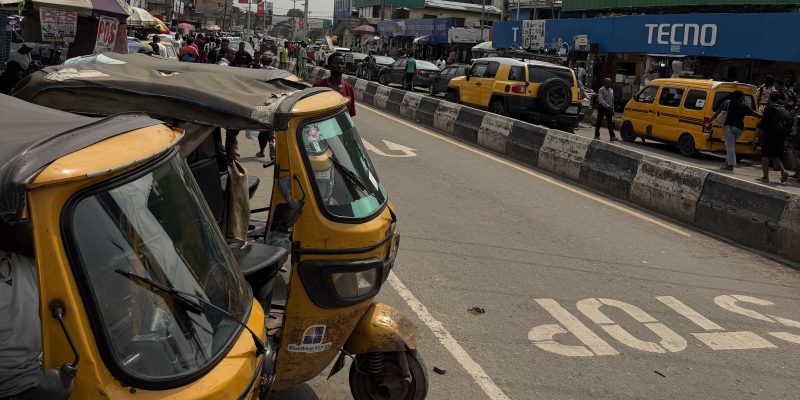
Lagos, Nigeria – Lagos, a bustling state in southwestern Nigeria, is home to over 20 million people. Widely regarded as one of the largest economic hubs in Africa, the city offers vast opportunities for employment, entrepreneurship, and social mobility. Yet, beneath these opportunities lies a daily struggle shaped by congestion, high living costs, and an overburdened transportation system.

Hope Ejairu
For many residents, especially commuters, each day begins long before sunrise. It is not uncommon for workers to wake up as early as 5:00 a.m. just to secure a place on a bus. At major bus stops across the city, long queues form as people wait to board commercial vehicles that will take them to their workplaces. This early start is often necessary to meet resumption times of 8:00 a.m. or 9:00 a.m., depending on workplace schedules and job demands.
Despite these efforts, commuting in Lagos remains unpredictable and exhausting. Traffic congestion (gridlock) affects both the Mainland and Island areas, turning relatively short distances into hours-long journeys. As the workday progresses, many employees become preoccupied, not just with their tasks, but with the daunting challenge of getting home. Some leave their offices earlier than scheduled in a bid to beat the traffic, yet still arrive home late at night, sometimes close to midnight.
Transportation costs further compound these challenges and with many workers earning modest incomes, the rising cost of commuting has become a heavy burden. The situation worsened following the removal of fuel subsidy announced by Bola Tinubu during his inaugural address on May 29, 2023, after being declared president by the Independent National Electoral Commission (INEC). Fuel prices surged, triggering a ripple effect across the transportation sector and leading to increased fares.
Before the subsidy removal, the cost of transportation from Iyana Ipaja to Yaba was ₦400, but it is currently between ₦800 and ₦1,000. Similarly, the fare from Dopemu to Ogba ranged from ₦250 to ₦300 but has now increased to about ₦500.
In the same vein, Oshodi to Ajah used to cost ₦1,000 but now ranges between ₦2,000 and ₦2,500; CMS to Ikeja used to cost ₦700 but now costs around ₦2,000, while Iyana Iba to Mile 2 used to cost about ₦300 to ₦500 but now ranges between ₦700 and ₦1,000.
In recent months, global geopolitical tensions involving countries such as the United States, Israel, and Iran have further driven up oil prices worldwide. Nigeria, despite being an oil-producing nation, has not been immune to these changes. As a result, transport fares have risen even higher, deepening the financial strain on Lagos commuters.
The impact extends beyond office workers. Small business owners, artisans, and delivery operators also face similar difficulties navigating the city’s congested road networks. For many entrepreneurs, transporting goods to customers has become more expensive and time-consuming, cutting into already thin profit margins.
At night, the situation often deteriorates further with some commercial drivers frequently taking advantage of late hours to hike fares, thereby forcing commuters to pay significantly more than usual. For those who cannot afford the increased cost, the only option is to walk long distances before finding a more affordable ride or sometimes, to complete the journey on foot entirely.
Despite these challenges, Lagos continues to attract thousands of people daily. The promise of opportunity outweighs the “hardships” for many Nigerians seeking better livelihoods. In 2024, the Deputy Governor of Lagos State, Dr. Obafemi Hamzat, revealed that approximately 6,000 people enter Lagos every day, with about half choosing to stay without a fixed address. This steady influx adds further pressure to an already “overstretched” urban system.
Ultimately, the story of Lagos is one of resilience. From corporate professionals to street traders, from artisans to car owners, Lagosians navigate a range of multifaceted challenges daily, balancing rising costs, enduring long commutes, and adapting to an ever-changing economic landscape. The city’s energy is undeniable, but so too is the toll it takes on those who call it home.
Support the New Americans magazine to continue to serve our community with precise news that affect the new American, immigrant and refugee community. https://paypal.com/donate/?hosted_button_id=8LHFS78NRNJJY&source=url