 By
By By Okon Ekpenyong
How did I not know this existed? That was one of my first thoughts after discovering Cleveland’s One World Day, one of the city’s longest-running multicultural celebrations.
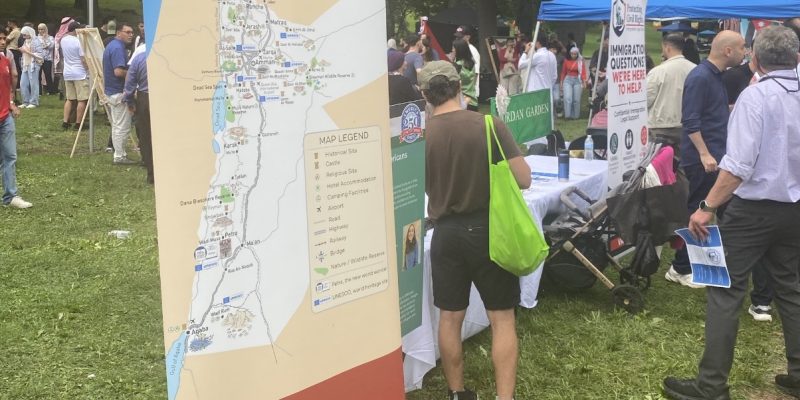
The 80th annual event took place Sunday, August 30, at the Cleveland Cultural Gardens, bringing more than 50 cultures together at Rockefeller Park for international food, music, dance, traditions and community.
What makes One World Day more than just another cultural festival is its history. First held in 1946, the celebration began as a way to promote peace, friendship and cultural understanding.
This year’s event also recognized America’s 250th anniversary, featuring displays highlighting immigrants and their descendants—including Peruvian, African and Ukrainian communities—and the contributions they have made to the nation. Despite the rain, thousands of people came out to celebrate.
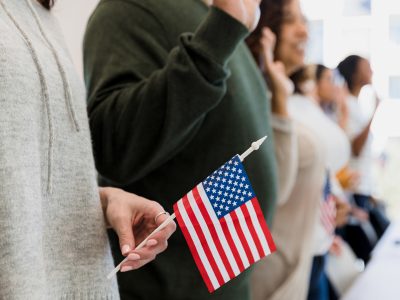
The day included a naturalization ceremony at Centennial Peace Plaza welcoming new U.S. citizens, the traditional Parade of Flags at noon, cultural performances and opportunities to explore the Gardens. But One World Day is only part of the story. The Cultural Gardens themselves are an attraction worth exploring.
You can be downtown Cleveland one minute and, just a few minutes later, find yourself driving along Martin Luther King Jr. Drive and East Boulevard, surrounded by beautiful monuments, statues, fountains, sculptures, stonework and landscaping representing cultures from around the world.
The Cleveland Cultural Garden Federation currently lists 38 developed gardens, with more in development. Visitors can encounter gardens representing Italian, Greek, Hungarian, German, Irish, Ukrainian, Syrian, Indian, Chinese and many other cultural communities.
Among them is the African American Cultural Garden, created after a 16-year campaign by Black Clevelanders to establish a space celebrating African American heritage and contributions.
And the many ethnic groups represented on Sunday was remarkable. Dan Hanson, an ambassador for the Cleveland Cultural Gardens, told TV Cleveland 20 that the Cleveland metropolitan area is home to more than 118 ethnic groups. He described One World Day as a safe, family-friendly opportunity to experience something new—all in one location.
For visitors, the scale of the Gardens is part of the fun. They stretch nearly three miles along Martin Luther King Jr. Drive and East Boulevard, beginning at East 105th Street near University Circle and continuing north toward Lake Erie near Gordon Park. Free parking was also available during One World Day, including at the Metroparks lot near the lake and the VA lot.
They were tram Trolley throughout the day offering visitors an opportunity to hop on and off a convienent way for visitors to explore each garden closely.
And because the Gardens sit next to University Circle, a visit doesn’t have to end when the festival does. Visitors can head to the Cleveland Museum of Art, the Cleveland Museum of Natural History, Severance Music Center and other nearby attractions, easily turning the experience into a full day in Cleveland.
That spirit was reflected in the reactions from people who attended. One commenter on the Cleveland Magazine’ Facebook page wrote, “I was there. It was phenomenal. Cleveland is so multicultural. We are all one.” Another visitor shared, “We had a great time once again. So many new gardens and cultures to experience. The little drizzle here and there made the heat tolerable.”
For me, that’s what made the day stand out. What started as a simple weekend trip turned into the discovery of a part of Cleveland that feels both historic and incredibly alive.
So, if you’re a New American, a lifelong Clevelander, an Ohioan, a family looking for something different—or someone like me wondering, “How did I not know about this?”—put One World Day on your calendar for next year.
Cleveland has a multicultural world hiding in plain sight, just minutes from downtown.
And it’s worth discovering.
Support the New Americans magazine to continue to serve our community with precise news that affects the new American, immigrant and refugee community. https://paypal.com/donate/? Dr;/.hosted_button_id=8LHFS78NRNJJY&source=url

Screenshot