 By

Bishnu Luitel
By Bishnu Luitel, Harrisburg PA
The midterm elections held in the United States on November 3, 2026, delivered an important message to American politics: in a democracy, the judgment of voters ultimately outweighs money, power, propaganda, and political pressure. Although President Donald Trump and the Republican Party attempted to bring voters to their side through their political influence, financial resources, and presidential power, they failed to achieve the expected results.
The Democratic Party secured majorities in both the House of Representatives and the Senate, ending Republican control of both chambers.
This outcome is not merely a victory for one political party and a defeat for another. It is also an expression of public dissatisfaction with the government’s performance, frustration over economic difficulties, and the people’s desire to hold political leadership accountable. According to the election coverage by the Associated Press, Democrats achieved significant victories even in states considered strongholds of the Republican Party.
Democracy is not a commercial enterprise in which the person investing the most money can obtain whatever outcome they desire. Political parties can campaign, candidates can mobilize financial resources, and wealthy individuals can express their support. However, the belief that voters’ decisions can be purchased and turned in one’s favor goes against the fundamental principles of democracy.
In this year’s American elections, billionaire Elon Musk’s financial investment became a particularly prominent topic of discussion. Reports indicate that he spent approximately $474 million in support of Republican candidates. This figure is based on financial disclosures available through October 14. Any possible spending after that date may not be included. Reports also indicate that 44 of the 106 candidates supported by Musk were defeated. This means that those 44 representatives had previously won elections in 2024 as Republican candidates, but in this election, the voters who had supported them chose Democratic candidates instead.
Although Musk’s financial influence and investments in support of Republican candidates attracted considerable attention in Texas, the results did not favor them. In the Senate race, Democrat James Talarico defeated Republican candidate Ken Paxton by a margin of approximately 1.2 million votes. Similarly, Democrat Gina Hinojosa defeated Republican Governor Greg Abbott by approximately 700,000 votes, becoming the governor of Texas.
This raises a serious question: If even spending hundreds of millions of dollars cannot change voters’ minds, what are the actual limits of money in a democracy? This election delivered the message that the financial influence of wealthy individuals cannot outweigh the people’s votes.
When Trump was elected president for the second time in 2024, he promised the American people economic prosperity, a lower cost of living, increased employment opportunities, and the protection of national interests. However, by the 2026 midterm elections, the economic problems facing ordinary citizens had raised questions about the effectiveness of those promises.
For American families, the true condition of the economy is not measured solely by stock market indicators or presidential speeches. The amount they must spend to buy coffee, eggs, milk, bread, fruit, and other groceries for breakfast and dinner reveals the real picture of their financial circumstances. The government’s successes and shortcomings are determined by people’s everyday expenses, fuel costs, household energy bills, and interest rates.
The Washington Post: Presented direct evidence of changes in breakfast costs by comparing the prices of food items commonly consumed in the morning.
Toast: Published figures showing that in 2025, the price of an omelet increased by 5.4 percent and the price of coffee increased by 5.1 percent.
Toast’s September 2026 data: Showed that the median price of an omelet served at restaurants had increased to $15.06.
Tariffs, or customs duties imposed on imported goods, remained one of the major economic policies of the Trump administration. His argument was that increasing tariffs on foreign products would strengthen American industries, create jobs, and increase national revenue.
However, the claim that foreign countries alone would bear the economic burden of tariffs did not prove correct. American importers pay the tariffs at customs. Importers, manufacturers, and retailers may then include some or a substantial portion of those costs in the prices of goods. Ultimately, consumers may have to pay higher prices, and the American people are now facing that very consequence.
A 2026 study by the Federal Reserve Bank of New York showed that the economic burden of the 2025 tariffs fell primarily on American importers and businesses. A significant portion of that burden was also passed on to consumers. Another study concluded that lower-income families experienced a comparatively greater impact from the tariffs.
Therefore, although tariffs were presented as a means of punishing foreign nations, it is unfortunate that their economic consequences reached the kitchens of citizens in the United States itself. However, the president did not appear to pay sufficient attention to this reality.
Trump also made attractive political promises about returning tariff revenue to the public. In September 2026, the White House announced a proposal to provide $5,000 to every adult American citizen. However, the proposal was tied to the condition that Republicans would win the House of Representatives and Senate elections. The Trump administration had offered the prospect of distributing a portion of the revenue collected through tariffs to American citizens, but those speeches remained limited to election slogans.
Making an announcement in politics and implementing it in practice are two different things. Ultimately, voters give greater importance to changes in their own lives than to political speeches.
During his political campaign, Trump emphasized ending wars, promoting peace, and keeping America away from unnecessary foreign conflicts. However, the war with Iran during his second term created new controversies in American politics.
According to an Associated Press report published on November 4, the eight-month-long war with Iran and the resulting increase in fuel prices negatively affected the Republican Party’s electoral performance. The report also noted that Trump himself acknowledged that rising gasoline prices caused by the war had become an electoral problem for Republicans.
When gasoline and energy prices rise in the United States, the consequences are not limited to people who drive vehicles. They can also affect transportation costs, agricultural production, food distribution, and the prices of everyday consumer goods.
The government is not the only party that bears the economic cost of war. Taxpayers, businesses, and ordinary citizens must also carry that burden.
A leadership that comes to power under the slogan of peace must answer to the public for the economic and human consequences of war. The question of accountability became an important issue in this election as well.
Another controversial aspect of the Trump administration was its immigration policy. Controlling illegal immigration is the right and responsibility of any sovereign nation. However, the enforcement of immigration laws cannot justify disregarding human dignity, civil rights, and due process.
The operations of Immigration and Customs Enforcement (ICE) became the subject of widespread debate and protests throughout American society. Incidents involving arrests, detention, deportation, and immigration enforcement raised questions about government accountability.
According to a report published by Human Rights Watch on June 25, 2026, at least 52 people had died in ICE detention during the first 500 days since the beginning of Trump’s second term. The organization pointed out serious shortcomings in healthcare, transparency, and government oversight within detention facilities.
Similarly, according to an ABC News investigation dated September 24, at least 21 people had been injured or shot by federal immigration officers during Trump’s second term, and eight of them had died. Three of those individuals were American citizens.
These facts raise a fundamental question: How can the lives and civil rights of innocent people be protected when state power is exercised in the name of immigration enforcement?
The law must be equal for everyone. Being an immigrant does not make someone a criminal. No one should be labeled a criminal on the basis of citizenship or birthplace. The responsibility for proving guilt belongs to the judicial process, not political speeches.
One of the most widely discussed outcomes of this election was the political transformation in Texas.
Texas has long been considered a strong political base for the Republican Party. Since 1994, Republicans had maintained their dominance in major statewide political offices. Since 2002, Republicans had also controlled the lower chamber of the Texas Legislature, known as the House of Representatives. However, the November 3 election changed this political equation.
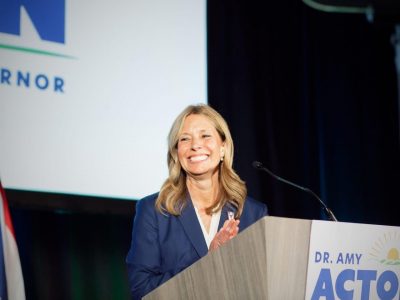
In Texas, the Democratic Party achieved significant victories in the Senate, gubernatorial, and other statewide races. Democratic candidates also won in many House districts. For the first time since 2002, Democrats regained control of the Texas House of Representatives.
Three results are particularly significant in national politics:
Senate: James Talarico defeated Ken Paxton.
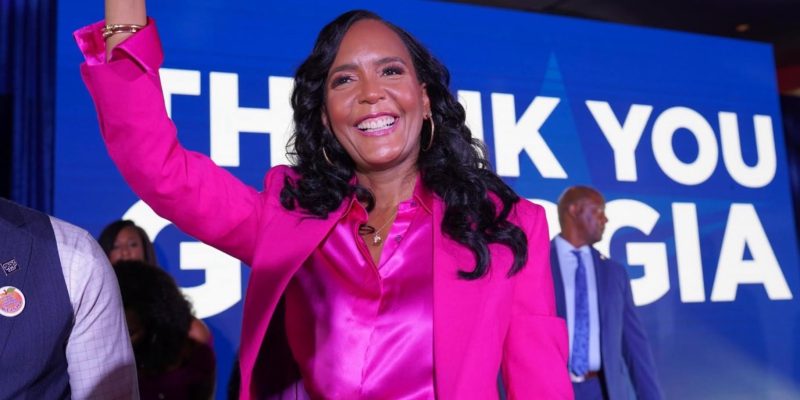
Governor: Gina Hinojosa defeated Greg Abbott.
State Legislature: Democrats regained control of the Texas House.
This result cannot be viewed merely as an ordinary electoral shift. It is a powerful example of democratic practice, demonstrating that voters in a state dominated by one political party for a long time can choose an alternative.
It also demonstrated the limits of Trump’s personal political influence. Even after using financial power and presidential influence to help candidates he supported win, he could not change the final decision of the voters.
The importance of American midterm elections is not limited to changing a state’s governor or senator. They also determine how the government will function during the remainder of the president’s term.
In the November 3 election, Democrats secured majorities in both the House of Representatives and the Senate. As a result, the legislative power of the Trump administration has weakened.
The president will no longer be able to pass every bill according to his wishes. The consent of the opposition party will be necessary on matters involving the budget, government spending, new legislation, and administrative appointments.
Similarly, after gaining control of the House of Representatives, Democrats will be able to pursue congressional investigations into Trump administration decisions, government spending, and possible irregularities. Congress’s oversight role will become even more important in holding the presidential administration accountable.
This is an important aspect of the system of checks and balances and the separation of powers envisioned by the United States Constitution.
In a democracy, being elected president does not grant unlimited authority over all branches of government. The balance of power among the president, Congress, and the judiciary is the foundation of democratic governance.
The Democratic Party’s success in this election was not caused by a single issue. Post-election news analyses have shown that issues such as inflation, housing costs, healthcare, energy expenses, war, and public distrust of the government influenced voters’ decisions.
In particular, changing political preferences among middle-class families, low-income citizens, young voters, and the Hispanic community appear to have played a role in the election results.
The American people have some basic expectations of their government.
They want affordable and quality food. They want an economic environment in which they can comfortably afford to buy a home. They want favorable interest rates and a stable economy for operating small and medium-sized businesses. Farmers want fair prices for their products. Children need quality education, and families need affordable healthcare. Fulfilling these needs is the government’s primary responsibility.
A president’s display of power on international platforms, challenges to political opponents, or insults directed at critics alone cannot make citizens’ lives easier. Leadership that fails to bring positive changes to people’s everyday lives cannot maintain political support for long simply by relying on election slogans.
This is the important political message delivered by this election.
Making promises in politics is natural. However, leadership that fails to fulfill its promises must clearly explain the reasons to the public. The political culture of making impossible promises to win elections, blaming opponents, and searching for new enemies to conceal one’s failures is dangerous for democracy.
Trump’s political style has repeatedly featured personal praise, aggressive speeches, accusations against opponents, and exaggerated claims about his own achievements.
However, in a democracy, a president’s popularity and the performance of a president are not the same thing.
Voters give priority not to how powerful a president is, but to how his administration has affected their lives.
Trump had pledged that his economic policies would make America prosperous, that tariffs would generate enormous revenue, that the public would receive financial benefits, and that the country would be kept away from war. However, the passing of tariff costs on to consumers, rising fuel prices due to the war with Iran, and human rights concerns arising from the implementation of immigration policies have raised questions about the effectiveness of his commitments.
This is the real test of political leadership: How much of what leaders say are they actually able to deliver?
This American election has also delivered an important message to political leaders in democratic countries around the world.
People are no longer passive groups who simply listen to political speeches. They are capable of evaluating government decisions, economic policies, human rights, public spending, and the conduct of political leaders.
Social media, independent news organizations, public data, and civic campaigns have made people better informed than ever before. Therefore, it would be wrong for any leader to believe that the public can be kept misinformed forever.
Winning a majority in a democracy does not mean receiving unlimited permission to rule over the people. It is a responsibility entrusted by the people for a limited period of time.
Therefore, elected leaders must regard the people’s votes not as a tool for displaying their personal power, but as a responsibility to serve the public.
This is not an era of arrogance, ego, threats, and the exercise of power through intimidation. This is the era of informed citizens. This is the era of citizens who ask questions. This is the era of accountable leadership.
Ultimately, in a democracy, presidents are not supreme, prime ministers are not supreme, and billionaires are not supreme. The people are supreme because the people themselves are the true source of state power.
Trump’s defeat should not be understood as a permanent victory for the Democratic Party either. Democrats must now prove through their actions that they deserve the public’s trust. If they fail in controlling inflation, improving healthcare, creating jobs, addressing housing issues, reforming immigration, and protecting democratic institutions, they too will have to face the people’s questions in the next election.
This is also the beautiful aspect of democracy: no political party is above public criticism.
The American midterm elections of November 3, 2026, should not be limited to being understood merely as Trump’s personal defeat. They should be understood as a democratic message from American citizens about the limits of money, power, and political influence.
Elon Musk spent hundreds of millions of dollars. Trump used the office of the presidency and his political influence. The Republican Party attempted to protect its traditional political base. But the final decision was made by the voters.
The changes in a traditionally Republican stronghold like Texas have also demonstrated the same principle. No state is the permanent property of any one political party. If the people wish, they can change even decades of political dominance.
This election has also reminded us of another important truth: being powerful in politics and winning the people’s trust are two different things. Money can buy publicity, increase access to the media, and expand political campaigns. But money cannot erase the genuine suffering and dissatisfaction of the people.
Democracy is not a bargain that can be bought with money. It is the right of citizens to exercise their judgment, freedom, and decision-making power.
Leaders must learn to respect the people not as a crowd expected to obey their commands, but as citizens possessing sovereign rights. State power must be used not to suppress the people, but to make their lives easier.
This is not an era of arrogance, ego, threats, and the heavy-handed exercise of power. This is the era of informed citizens. This is the era of citizens who question. This is the era of accountable leadership.
Ultimately, in a democracy, presidents are not greater, prime ministers are not greater, and billionaires are not greater. The people are the greatest because they themselves are the true source of state power.
Major Sources
Associated Press — 2026 midterm elections and public reaction to Trump.
Texas Secretary of State — Official election results for November 3.
The White House
Fast Company — Elon Musk’s election spending.
Federal Reserve Bank of New York — Economic burden of tariffs.
Human Rights Watch — Deaths in ICE detention and human rights.
Associated Press — Iran war and election results.
Support the New Americans magazine to continue to serve our community with precise news that affect the new American, immigrant and refugee community. https://paypal.com/donate/?hosted_button_id=8LHFS78NRNJJY&source=url