 By
By - Expanded measures within the Columbus Division of Police will establish seven-day retention, tighter access controls, prohibited uses and independent review.
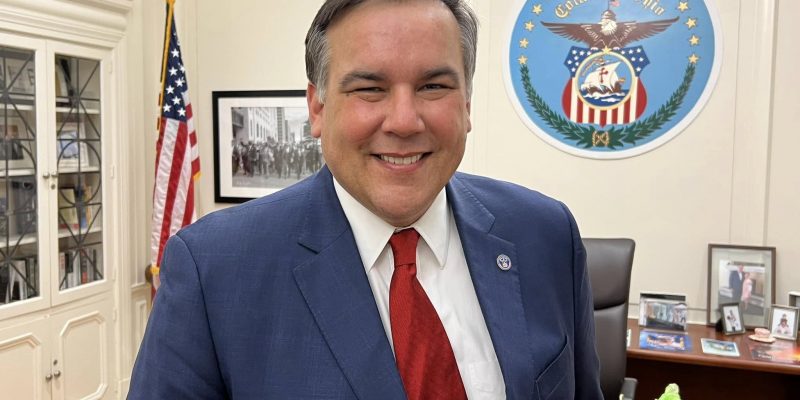
Columbus Mayor Andrew J. Ginther has announced expanded protocols governing the Columbus Division of Police’s use of automated license-plate reader technology, establishing clear limits on how data may be used, how long it may be retained, who may access it and independent oversight of the technology’s use.
While this technology has proven extremely valuable in helping Columbus Police solve homicides, arrest violent criminals, return missing children and elderly loved ones, legitimate concerns around privacy and potential for abuse remain.
“This should not be a choice between protecting civil liberties and protecting people from violent crime,” said Mayor Ginther.
“Columbus can and should demand both. We will use technology when it makes our residents safer, put strong guardrails around its use and hold ourselves, and our technology partners, accountable to the people we serve.”
Building on safeguards already in place
Over the past 12 months, the Columbus Division of Police has proactively implemented multiple measures around technology oversight and accountability:
- In December of 2025, CPD began developing a centralized policy governing all Division sensor systems. This policy will be published September 4, 2026.
- In December of 2025, CPD enabled search filters to exclude Division devices from searches related to immigration enforcement and reproductive care.
- CPD began conducting an audit of historical searches in May of 2026
- CPD opted out of national network sharing, removed one-to-one sharing with 287(g) agencies, and revoked data sharing for non-Ohio agencies that do not reciprocally share data.
- On July 10, 2026, CPD released redacted audit information in full, and Mayor Ginther promptly instructed CPD to opt out of statewide data sharing.
- CPD published a public-facing transparency portal including details on data retention practices, camera activity, number of searches, and sharing practices.
- In August 2026, an automated auditing tool was put into place to proactively identify misuse.
- In August 2026, CPD added a requirement in the system that officers must input a case or incident number for every search.
To build on the measures already implemented by police, today Mayor Ginther announced the following additional actions:
- A third party will conduct independent audits of CPD’s license plate reader use. Results from these outside reviews, to be conducted on a bi-monthly basis, will be shared with the public via CPD’s transparency portal.
- CPD’s retention period for license plate reader data will drop from 30 days to 7 days.
- CPD will end direct outside-agency access to its data. Outside agencies must be granted permission by CPD to perform a search using Columbus data.
- CPD will prohibit use of its data for the following purposes:
- Civil immigration enforcement
- Reproductive-health investigations
- To gather information solely based on First Amendment-protected activity, protests and political activity
- Religious activity
- Personal/non-law-enforcement purposes
- Tracking based solely on protected characteristics
- CPD will require supervisory oversight when license plate reader searches are conducted and will suspend user access immediately if potential misuse is identified.
- CPD will create a public safety “kill switch” allowing Columbus to immediately suspend outside access upon discovery of misuse or security threat.
- CPD will not install or activate the 11 readers procured and planned for installation for 2026.
“I’ve listened carefully to all sides of this debate- including neighbors asking us to use every tool possible to maintain safety in their neighborhoods, and community members with valid concerns about privacy. Columbus residents deserve to know how this technology is being used, who has access to their information and what safeguards are in place to prevent misuse,” said Mayor Ginther.
“Our expectation is simple: If technology is going to be used in Columbus, it must meet our standards for safety, privacy and accountability.”
Columbus Police Chief Elaine Bryant affirmed the Division’s commitment to transparency, accountability, and strengthening trust with the community.
“License plate reader cameras have played a role in 60% of our recent homicide arrests. We cannot understate what that means to families of victims and missing people, and public safety overall in Columbus. But the effectiveness of a tool does not eliminate our responsibility to use it appropriately,” said Bryant.
“Every search must have a legitimate law-enforcement purpose, every user must be accountable, and misuse will not be tolerated. And let me be clear: those who break the trust of our community will face severe consequences.”
Examples of recent successes involving license plate reader technology include:
12/30/25: Homicide (Spencer and Monique Tepe)- License plate reader technology was used to identify the vehicle used to commit the murders. LPR data was used to track vehicle travel to and from Illinois and to locate the vehicle to process as evidence.
2/26/26: Nonfatal Shooting – Shooting at the MLK Library involving an individual from East High School. License plate reader technology was used to identify the vehicle and locate the shooter. A male was arrested for felonious assault and a weapons offense.
6/11/2026: Silver Alert – Missing 72-year-old with dementia wandered off while her husband was at work – Victim did not have a phone for pinging, Silver Alert issued. License plate reader technology was used to locate the vehicle, which led to the victim being safely recovered in a neighboring jurisdiction.
7/3/2026: Child Kidnapping – The noncustodial parent of a 4-year-old girl kidnapped her from her mother following a violent armed confrontation in Columbus. License plate reader technology was helped safely locate and swiftly recover the child in Tennessee.
8/13/2026: Gross Sexual Imposition – License plate reader technology was used to locate vehicle and arrest suspect charged with groping two female joggers in separate incidents near OSU.
Support the New Americans magazine to continue to serve our community with precise news that affect the new American, immigrant and refugee community. https://paypal.com/donate/?hosted_button_id=8LHFS78NRNJJY&source=url