 By
By By Abdikhayr H. Soofe
America’s story is one woven from the threads of diverse origins, a tapestry that defies the simplistic narratives often peddled in heated political rhetoric. From the earliest days, the nation’s foundations were laid by waves of immigrants, refugees fleeing persecution, colonial soldiers hailing from distant lands like England, France, and Germany, and enslaved Africans forcibly brought to these shores against their will. Many of those enslaved people came from West Africa, where Islam had a presence, though the majority practiced indigenous religions or were later converted to Christianity under duress.
Figures like Frederick Douglass, an escaped slave turned abolitionist, or Harriet Tubman, who led countless to freedom, embody this complex heritage. Even icons such as Thomas Jefferson, a descendant of Welsh immigrants, or Alexander Hamilton, born in the Caribbean, underscore how America’s greatness stems from its mosaic of backgrounds. This history isn’t just a footnote—it’s the essence of what has made the United States a beacon of opportunity, innovation, and resilience.
Yet, in recent years, former and current President Donald Trump has repeatedly targeted segments of American society he perceives as vulnerable, using inflammatory language to insult, discriminate, and stoke enmity against them. This tactic often appears designed to distract from substantive policy discussions and unfulfilled campaign promises, such as comprehensive infrastructure reform or balanced trade deals that truly benefit working-class Americans.
Instead of focusing on deliverables for the Oval Office, Trump has singled out specific communities to appeal to a base he believes responds to divisive rhetoric. A prime example is his recent tirade against Somali immigrants in Minnesota, where he labeled them “garbage” and declared he doesn’t “want them in our country.” This echoes his past attacks on other groups: calling Mexican immigrants “rapists” and criminals during his 2015 campaign launch, proposing a “total and complete shutdown” of Muslims entering the U.S., spreading baseless claims about Haitian immigrants in Ohio eating pets, and deriding Central American caravans as “invasions.”
Communities like the Somalis in Minnesota—majority of whom are U.S. citizens contributing as entrepreneurs, educators, and public servants—suddenly found themselves vilified by the very leader sworn to protect all Americans, whether at home or abroad. Such statements not only alienate these groups but also signal to U.S. allies and adversaries that America’s commitment to its diverse citizenry is conditional.
The majority of Americans, polls and public discourse suggest, are repulsed by this vitriol emanating from the White House, save for a vocal minority influenced by echo-chamber media and amplified bigoted voices. This rhetoric isn’t just distracting, it’s destructive. Domestically, it frays the social fabric, fostering division in communities where unity is essential for progress. Internationally, it erodes America’s moral authority, making it harder to champion human rights or lead coalitions against tyranny when our own leadership echoes exclusionary tropes. How can the U.S. credibly promote democracy abroad while its president undermines it at home through targeted harassment of citizens?
Importantly, America is not synonymous with Donald Trump. While he enjoys First Amendment protections to voice his opinions—no matter how distasteful—his power to act on threats against American citizens, whether in the U.S. or overseas, is constitutionally constrained. The executive branch cannot unilaterally deport citizens or strip rights without due process and checks like congressional oversight and judicial review stand as bulwarks.
Looking back, the best course of action for the U.S. Congress should have been swift bipartisan condemnation, perhaps through resolutions or investigations into whether such rhetoric incites violence or violates ethical standards for public officials. Censure or even impeachment proceedings could have been pursued if the comments crossed into impeachable territory, as seen in past administrations.
For the American media and civic leaders, the role must be proactive: not just reactive reporting or protests for affected groups like the Somalis, but vigilant fact-checking, amplifying diverse voices, and holding power accountable to safeguard everyone’s freedoms—because unchecked authoritarianism threatens all skins, regardless of color or origin.
The judiciary, meanwhile, will need to reinforce constitutional guardrails, swiftly adjudicating cases of discrimination, executive overreach, or threats to civil liberties, ensuring that no one person can erode the rule of law.
In the end, to Somali-Americans and all communities feeling the sting of exclusion: America’s promise of better days endures, rooted in a history of overcoming division through collective resolve. And to fellow Americans, now is the time to stand for what is right —not out of charity, but because our shared future demands it. Rejecting hate and embracing our pluralistic strength is the only way we can reaffirm that this nation offers far more than fleeting profanity; it offers enduring hope.
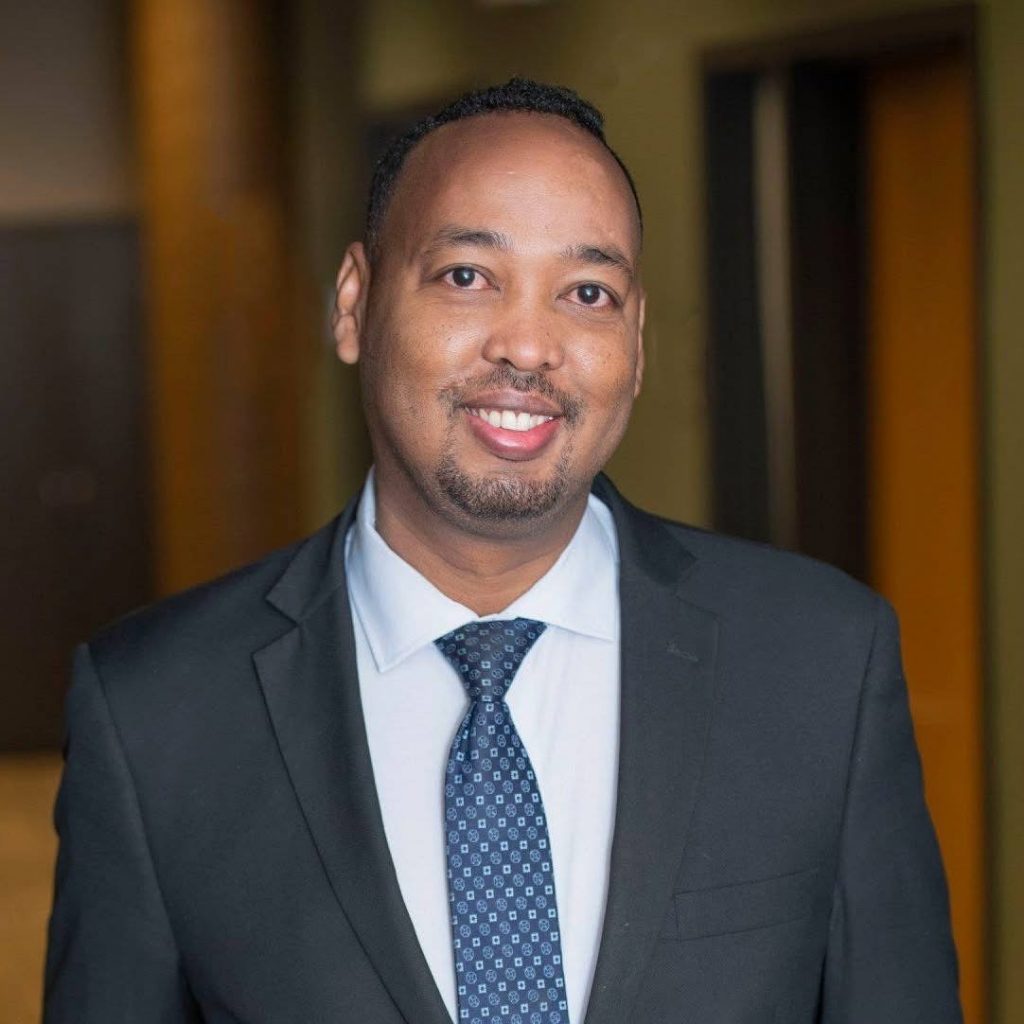
(Abdikhayr H. Soofe, Awsoofe@gmail.com. Mr. Abdikhayr Soofe is Somali American, and an advocate for inclusive public policy and leadership development who lives and works in Columbus, Ohio.)
Support the New Americans magazine to continue to serve our community with precise news that affect the new American, immigrant and refugee community. https://paypal.com/donate/?hosted_button_id=8LHFS78NRNJJY&source=url