 By
By Nepali-Speaking Bhutanese Community Marks 118th Anniversary of Senior Poet Narayan Prasad Luitel
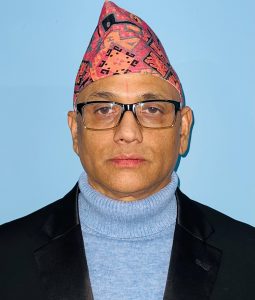
Bishnu Luitel
By Bishnu Luitel – Harrisburg, Pennsylvania
“There is a stove, yet we must eat leftovers;
There is flour, yet we must sleep hungry.
Through leaking rain, gathering grass and firewood, we survive in hardship.
Let us unite and break these traditions and harmful customs.
Come, open your eyes—women, speak up and unite in organization.”— Voice of the Oppressed Woman
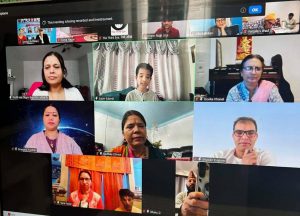
The 118th birth anniversary program of senior Bhutanese creator and poet Narayan Prasad Luitel was grandly held via Zoom on Sunday, February 8, 2026. The search for and recognition of creators among Nepali-speaking Bhutanese continues steadily. So far, research has established Poet Narayan Prasad Luitel as a distinguished senior poet.
The significant participation of emerging young poets in the program clearly showed the encouraging attraction of Nepali-speaking Bhutanese youth toward the Nepali language and literature. Since 1989, the Government of Bhutan imposed restrictions on the language and literature of minority Nepali-speaking Bhutanese. The younger generation’s awareness of this history and their growing dedication to their language and literature is a positive indication for Bhutanese society.
The program was jointly organized by the Nepali Sahitya Parishad, Bhutan, and the Nepali Language Study Center, Columbus, Ohio. The event was chaired by Ganga Lamitare, President of the Nepali Sahitya Parishad, Bhutan, and the chief guest was Sharada Dhital of the International Literary Society, Columbus Chapter.
Poet Narayan Prasad Luitel was a simple, natural creator closely connected to the lives of ordinary people within Nepali-speaking Bhutanese literature.
He was born in 1908 in Panbari village of Samchi District, Bhutan, and passed away in 1997 at the age of 89 in Hage Kalimati, Sibsu. He was the middle son of Khada Nanda Luitel and Chhayadevi Luitel. He had one elder brother, one younger brother, and six sisters.
His family had received a kaso (land ownership certificate) from the Bhutanese king and later migrated to Tala, Bhutan. In 1958, Mandal Hasta Bahadur Khadka Chhetri of Sibsu invited Pandit Narayan Prasad Luitel to recite the Purana at his home. On that occasion, land was donated to him. As he greatly liked the place, he later purchased additional land and settled there permanently with his family. According to Hindu scriptures, donating land holds great religious significance. At that time, Bhutan had large landowners, and it was common to donate land to gurus and priests—a tradition reflecting deep religious faith that continues even today.
Wherever Baba Khada Nanda Luitel settled, he built a temple in his own courtyard. While living in Tala, Bhutan, he constructed a Shiva Panchayan temple in his yard. He was saintly and ascetic in nature. Later, his son, Poet Narayan Prasad Luitel, upheld the religious principles followed by his ancestors and established a Vishnu Panchayan temple in his courtyard at Hage Kalimati, Sibsu. Even today, his grandchildren and great-grandchildren serve there as priests.
His residence remained in Hage Kalimati of Sibsu, irrigated by the Jitti and Sibsu rivers. Geographically flat and agriculturally fertile, Kalimati’s people mainly depend on farming. Being part of the Terai region, rice cultivation is abundant. In addition to rice, cash crops such as betel nut, coconut, and lychee are produced in large quantities. Due to the beautiful village environment, healthy climate, and fertile land, his descendants continue to reside in their ancestral home and surrounding areas.
From childhood, Poet Luitel was studious, disciplined, and creative. His early education began under Guru Pandit Rangalal Gautam in Buxaduar, now in West Bengal. Guru Rangalal was a priest at a temple built by Indian soldiers. There, Luitel studied the Vedas and other Sanskrit scriptures and learned ritual practices. Later, he went to India,Vrindavan for higher studies, gaining strong command over grammar and the Puranas and achieving the educational level of Uttar Madhyama.
His major literary works include:
1)Shivalaya Mahatmya
2)Gyan Darpan Narayanopadesh
3)Madhyashodashi Shraddha Prayog Vidhi
4)Narayan Gyan Manjari
His writings encompass women’s consciousness, moral awareness, life’s special circumstances, and deep spiritual themes. Social reality, simplicity of common life, and human sensitivity are also reflected in his works.
He was a scholar of Sanskrit literature and had deep interest in Nepali literature, poetry, and drama. Writing articles, making commentaries, and engaging in literary activities were part of his nature.
Pandit Poet Narayan Prasad Luitel was an accomplished reciter of the Purana and had profound knowledge of astrology. His time was spent reciting scriptures, preparing horoscopes, and dedicating his remaining hours to literary pursuits.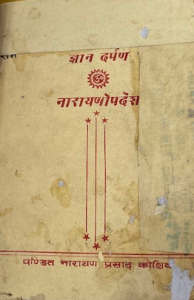
Poet Narayan Prasad Luintel was a deeply patriotic poet. In his poetic works, one can find strong feelings of patriotism and loyalty to the monarchy.
Through his poems, he described the development work taking place in the nation and the development-loving king in such a way, an example of which is as follows:
“Monasteries, temples, mills, bridges, electricity, industries—so many;
Telephones, irrigation canals, roads, banks—such progress everywhere.
As letters flow across nations, welfare spreads all around.
Victory to such a great king and to the Government of Bhutan!”
This poem was dedicated to Bhutan’s third king, Jigme Dorji Wangchuck, known as the Father of Modern Bhutan.
In social life, Poet Luitel was outspoken, friendly, simple, and natural. He advocated for women’s rights, natural living, and social awareness. Alongside devotedly raising his family, he equally valued literary creation. He preferred a simple, joyful lifestyle and delighted in high ideals.
Regarding women’s struggles, he wrote:
“There is a stove, yet we eat leftovers;
There is flour, yet we sleep hungry.
Through leaking rain, gathering grass and firewood, we survive in hardship.
Let us unite and break these harmful traditions.
Open your eyes—women, speak and organize together .“-Voice of the Oppressed Woman
Narayan Prasad Luitel was married to Ambika Dulal. Poet Narayan Prasad and Ambika Luintel had five sons and two daughters. All of his sons were educated and well-learned. His eldest son, Chandrakanta Luitel, was an astrologer. The second son, Ram Krishna Luintel, is a priest and astrologer. He is currently living in the United States with his family. The third son is a priest, the fourth is an astrologer, and the youngest is also an educated person.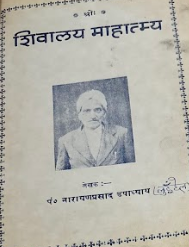
At that time, even in a country like Bhutan, the family of Poet Narayan Prasad Luitel was recognized as an educated family. During that period, most people in Bhutan were deprived of the opportunity to read and write. There was no access to schools for the general public. The initial phase of modern schooling in Bhutan began during the reign of the third King, Jigme Dorji Wangchuck (1952–1972).
Thus, Poet Narayan Prasad Luitel remains memorable in Nepali literature as a creator who made significant contributions through simple language, natural expression, and social consciousness.
Some of his verses:
Do not place excessive hope in sons, wealth, wife, or relatives;
In this world, one’s deeds alone determine what truly becomes one’s own.— Narayanopadesh
“Look at the world—we women are all the same,
Yet why are we belittled by others?
With a child in arms, rising at two each night,
The oppressed body pounds rice in the mortar to survive”.-Voice of the Oppressed Woman
A deeper look into his works reveals profound faith in God and religion. His patriotic verses reflect love for the motherland and responsibility toward society. Rejecting society’s impoverished attitude toward women, he raised a strong voice for change through his poem Voice of the Oppressed Woman, calling for awakening and unity.
The poem has been translated in a thematic and semantic manner, capturing its spirit and meaning without adhering to a literal word-for-word translation.
Support the New Americans magazine to continue to serve our community with precise news that affect the new American, immigrant and refugee community. https://paypal.com/donate/?hosted_button_id=8LHFS78NRNJJY&source=url




The ad is not displayed on the page
current post: Nepali-Speaking Bhutanese Community Marks 118th Anniversary of Senior Poet Narayan Prasad Luitel, ID: 18789
Ad: Ad created on January 18, 2026 7:45 pm (18608)
Placement: After Content (18609)
Find solutions in the manual