 By
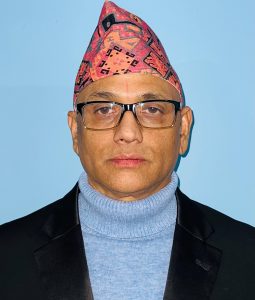
Bishnu Luitel
By Bishnu Luitel, Harrisburg, Pennsylvania
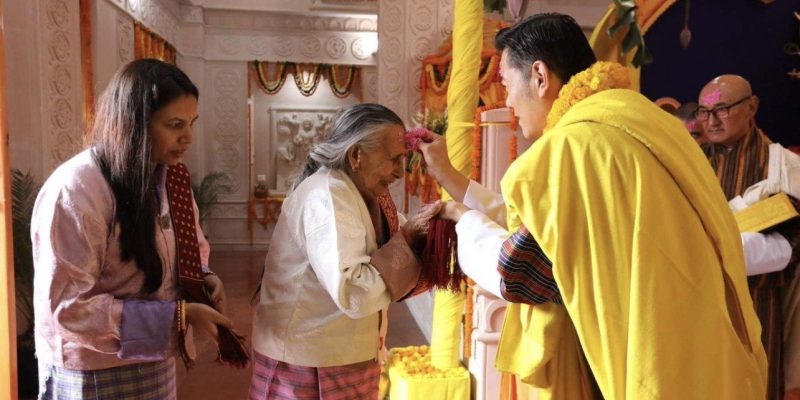
After images became public showing Bhutan’s King Jigme Khesar Namgyel Wangchuck receiving Dashain tika during Vijaya Dashami in 2026 and also applying tika to members of the public, an important question has arisen: Is this a natural expression of religious tolerance and cultural harmony, or is it a symbolic attempt to divert attention from Bhutan’s political history and the injustices committed against the Nepali-speaking community?
Religion is a means of making people better human beings, not a façade for the powerful to fulfill their own interests. Religion teaches people to speak the truth, understand the suffering of others, refrain from injustice, protect the vulnerable, and treat everyone equally. Therefore, the true identity of a religion is not established merely through offerings made at temples, lamps lit in monasteries, tika applied to the forehead, or participation in religious ceremonies. A person’s religious consciousness and morality are truly tested by how they treat other human beings.
There is nothing objectionable in the king applying tika according to Hindu tradition. Showing respect for any religion, culture, or tradition is a positive gesture. A Buddhist king participating in Dashain, the great festival of Hindus, can also convey a message of religious coexistence. However, the entire history of a state, the nature of its governance, and its treatment of citizens cannot be evaluated solely based on one public religious ceremony.
We cannot overlook the contradiction between the red tika on the king’s forehead and the continuing pain on the foreheads of displaced citizens who have been denied the right to remain citizens of their own country. This very contradiction provides grounds for questioning Bhutan’s present cultural message.
During the reign of Bhutan’s Fourth King, Jigme Singye Wangchuck, there was also a tradition of celebrating Dashain, performing Durga Puja, conducting recitations of the Durga Saptashati, and receiving tika on the day of Vijaya Dashami. Such activities may have played a role in demonstrating cultural closeness with Nepali-speaking Bhutanese citizens, particularly those in southern Bhutan, where Hindus constituted the majority.
However, there is another side to history. From the late 1980s onward, the citizenship, national identity, language, and cultural policies introduced by the Bhutanese government seriously affected the Nepali-speaking Lhotshampa community.
Following the Citizenship Act of 1985, citizenship disputes intensified. Serious controversies arose during the 1988 census over the classification of citizenship and residential status. Between 1990 and 1992, large numbers of Nepali-speaking Bhutanese were forced to leave the country and seek refuge in Nepal and India.
Reports by Human Rights Watch document incidents involving the loss of citizenship, arrests, torture, confiscation of property, and forced displacement.
According to the 2001 report of the United States Committee for Refugees and Immigrants, an American organization, an estimated 144,000 people who had left Bhutan were living as refugees in neighboring countries in 2000. Of them, 129,000 were in Nepal and more than 15,000 were in India. Most of these refugees were Nepali-speaking Lhotshampas.
The question that must be raised here is not about religion or festivals, but about how a state treats its citizens. Bhutan is a nation with a multilingual, multiethnic, and multicultural society. Respecting the Hindu festival and protecting the language, culture, citizenship, and political rights of Hindu citizens are two separate matters. Furthermore, when state-level recognition is given only to Buddhist and Hindu festivals, questions also arise regarding the respect and equality afforded to communities that follow other cultures. Fulfilling the first responsibility does not prove that the second has been fulfilled.
A king may receive Dashain tika, extend greetings to Hindus, and convey a message of religious tolerance. However, the suffering of citizens displaced in the past, their lost citizenship and property, and their right to return to their homeland must also be addressed. That is where the true meaning of cultural harmony begins.
The respect shown toward Dashain during the reign of Fourth King Jigme Singye Wangchuck cannot be viewed separately from the history of the Nepali-speaking community. On the one hand, there was participation in Hindu festivals and the demonstration of respect for religious traditions. On the other hand, during that same reign, serious disputes arose concerning the citizenship, language, identity, and residency of Nepali-speaking Lhotshampas.
The Fourth King also used to invite Hindu priests to perform rituals invoking divine power during major Hindu festivals, conduct Durga Saptashati recitations during Durga Puja, and receive Durga tika. It is recalled that respected priests, including Pandit Shiv Prasad Pokharel, Pandit Tulsi Ram Bhandari, Pandit Tikaram Bhattarai, and many others, were invited to Thimphu to conduct worship and religious ceremonies for Durga Puja. He would also apply tika to others and receive tika himself from the hands of religious teachers and priests.
Today, images have also become public showing the Fifth King, Jigme Khesar Namgyel Wangchuck, receiving Dashain tika. This can be understood as an attempt by the younger generation of the monarchy to convey a message of cultural tolerance. However, when comparing the conduct of the current king with events during the reign of his predecessor, it is necessary to examine both historical continuity and change.
One generation does not necessarily have to repeat the mistakes of the previous generation. It would also be inappropriate to place the responsibility for events during the Fourth King’s reign and the present conduct of the Fifth King on the same scale and automatically reach a conclusion. However, without resolving past injustices, it is equally insufficient to regard present-day images of harmony as proof of national reconciliation.
Even within a family, not all members of the same lineage share identical views and behavior. In the mythological Ramayana, Ravana had Vibhishana in his family, while Prahlada belonged to the family of Kansa. Therefore, it is reasonable to expect the present king to demonstrate conduct that is different from the past and more committed to justice. But such change must be demonstrated not through speeches, religious ceremonies, or public photographs, but through policy decisions and justice experienced by affected citizens.

Screenshot
Bhutan has consistently presented itself on international platforms as an example of peace, happiness, Buddhist philosophy, and cultural coexistence. Gross National Happiness, One Nation, One People, and now Gelephu Mindfulness City have become major national messages of Bhutan.
Bhutan has every right to present Buddhist philosophy to the world as a symbol of peace and compassion. Spreading the teachings of Buddha internationally is also a positive undertaking. However, while conveying messages of peace and compassion in the name of Buddha, it is by no means justifiable for the state to forget the suffering and injustices experienced by its own citizens.
The teachings of Buddha are based on compassion, equality, nonviolence, and the alleviation of suffering. Therefore, a state that promotes Buddhist philosophy must also demonstrate compassion and justice toward citizens who have suffered injustice in its history. Religious and cultural closeness between Hinduism and Buddhism is natural. Both traditions have imparted important teachings about humanity, morality, and righteous conduct. However, demonstrating similarities between the two religions and overshadowing the question of historical injustice committed against a community are two different things.
Some of those who suffered injustice are still living difficult lives in refugee camps in Nepal. Many members of the first generation have passed away, while victims of the second generation are also approaching old age.
Many other victims have now been resettled in Europe, the United States, Canada, and Australia. Yet, among these Bhutanese people scattered across the world, some have relatives who remain trapped inside Bhutan, like parrots in cages. If Bhutanese people expelled from their country cannot set foot in that one country anywhere in the world, that country is none other than their ancestral homeland and birthplace, Bhutan.
According to the UNHCR’s 2024 report, more than 113,500 Bhutanese refugees were resettled from Nepal to third countries between 2007 and 2016. As of March 2024, 6,365 Bhutanese refugees remained in two refugee settlements in Nepal. In a 2019 survey on their preferences, 2,418 people expressed a desire to return to their homeland.
While Bhutan continues to share Buddha’s message with the world, it must also honestly address its historical record of displacing families and the injustices associated with the Nepali language, literature, culture, and identity.
In its 2007 report, Human Rights Watch (HRW) stated that the Nepali language was removed from the curriculum of schools in southern Bhutan in 1989 and that policies relating to national identity had been introduced before then.
The ambitious project of Bhutan’s Fifth King, Gelephu Mindfulness City, has now become a subject of international discussion. It is being presented as a future economic center, a model of modern development, and a place of spiritual peace.
Yet, there is a serious historical question associated with this very project: What is the past of the land on which this city is to be built? Whose umbilical cords and the bones of whose ancestors lie buried there? Who was born on that sacred soil, and who alone knows the fragrance of that birthplace?
Nepali-speaking Lhotshampas living in Gelephu and surrounding southern areas were displaced during the 1990s. Many of them had to abandon their ancestral homes, agricultural lands, and property and seek refuge in camps in Nepal. Members of displaced families have now been resettled in different countries, including the United States, Australia, Canada, and Europe. However, their connection to their birthplace and ancestral property has not ended.
Nepali-speaking people who were displaced have continued to raise questions about ownership of their ancestral land and justice in connection with the Gelephu Mindfulness City project.
A report published by the South China Morning Post on December 1, 2024, stated that displaced Nepali-speaking people had expressed dissatisfaction, saying that Gelephu Mindfulness City was going to be built on their ancestral land. The report included the views of displaced individuals, including Krishnabir Tamang. They stated that they still have their formal documents claiming the lands that is being used for part of GMC.
Meanwhile, on November 1, 2026, a program to construct 108 Zangchub Chortens in the Gelephu Mindfulness City area was completed. According to the official project details of Bhutan, each chorten stands 15 meters tall. The construction was completed in a single day with the participation of approximately 40,000 volunteers.
According to an Associated Press (AP) report dated November 1, approximately 40,000 volunteers completed the outer structures of 108 Buddhist stupas. The report stated that around 200,000 people gathered to witness the event.
These chortens are religious structures of the Buddhist faith. Their construction may be religiously significant for the people of Bhutan. However, alongside the religious importance of this project, it is natural to raise questions concerning the historical ownership of the land and the rights of the displaced community.
Building a new city in the name of development is not wrong. But if the foundation of development suppresses someone’s historical suffering, addressing that suffering justly must also be an integral part of development.
Furthermore, the Bhutan Broadcasting Service (BBS) has reported that approximately 1,400 acres of land belonging to 552 landowners in Samtenling Gewog will be affected by the construction of the Gelephu International Airport. The government has presented options involving land exchange, tokenization, or financial compensation. This also demonstrates that land, displacement, and compensation have become important issues in the development process in the Gelephu region.
Therefore, it is necessary to seriously address the land and rights issues of both those displaced in the past and citizens currently affected by development projects.
Bhutan presents Gross National Happiness to the world as a distinctive feature of its system of governance. But should the concept of national happiness also include the happiness of citizens displaced from their own country?
The plight of Bhutanese refugees who are still living in refugee camps in Nepal with hopes of returning home is not merely an issue of resettlement. It is connected to citizenship, national identity, human rights, ancestral property, and the right to return to one’s homeland. Although many refugees have been resettled in third countries, resettlement cannot be considered a voluntary solution for everyone. Some still wish to return to their birthplace and regain their rights to their ancestral property.
There must be meaningful dialogue between Nepal and Bhutan regarding the future of the refugees living in Nepal. A transparent process is also necessary concerning the rights of those who wish to return home, the reassessment of citizenship, a just resolution of property claims, and the situation of political prisoners.
Even today, demands for the release of political prisoners continue to be raised. In a report published on September 21, 2026, Human Rights Watch (HRW) called for the release of the 28 remaining political prisoners in Bhutan. Earlier, in June 2026, two political prisoners, Chaturman Tamang and Hastabahadur Rai, had been released.
According to HRW, many of the remaining prisoners belong to the Nepali-speaking community, and their cases are connected to disputes concerning citizenship and political rights.
In such circumstances, images of Dashain tika being applied at the royal palace alone cannot convey a complete message of national reconciliation.
On October 21, 2026, the King and Queen of Bhutan participated in celebrating Dashain with the Hindu community at the Devi Panchayan Temple in Thimphu. Bhutanese media reported that they performed worship at the temple and offered Dashain tika and blessings to members of the public. According to Bhutan’s state broadcaster, BBS, Dashain has been recognized as a national holiday since 1980. This can be regarded as a sign of respect toward the Hindu community. However, the true test of religious tolerance is not limited to whether the king applies Dashain tika. Its real test lies in whether the state grants equal citizenship rights to all religious, linguistic, and ethnic communities.
Are Nepali-speaking citizens allowed to preserve their language and culture? Are Hindu citizens free to maintain their religious identity? Do citizens displaced in the past receive justice? What is the situation of prisoners held in jail for political reasons? Without answers to these questions, the message of religious harmony cannot be complete.
The Bhutanese king receiving Dashain tika may be a positive cultural gesture. It may also become an opportunity to strengthen harmony between Hindu and Buddhist communities. The possibility that the Fifth King may demonstrate a different outlook and a more just approach than the Fourth King cannot be ruled out. But one thing must be clear: History cannot be erased through religious ceremonies. Past injustices cannot be covered up by present-day publicity. Nor can a claim of complete national happiness be made without addressing the suffering of displaced citizens.
If Bhutan wants to teach the world the compassion of Buddha, it must also demonstrate that same compassion in practice toward its own displaced citizens. If the vision is to transform Gelephu Mindfulness City into the world’s most peaceful and happiest city, then the tears of past victims and the history of injustice must also be addressed at its foundation.
The red Dashain tika on the king’s forehead is one image. But the desire to return to their own country that remains in the hearts of thousands of Nepali-speaking Bhutanese is a reality. The responsibility for narrowing the distance between these two lies with the state itself. The king receiving tika may be a sign of cultural harmony, but granting justice to displaced citizens would be the real proof of harmony.
Before Bhutan presents the world with its dream of a Mindfulness City, it must be able to heal the wounds in its own history. Only by resolving the refugee problem, releasing political prisoners, addressing citizenship issues justly, and ensuring the rights to ancestral property can Bhutan’s message of peace, compassion, and national happiness acquire genuine meaning. Otherwise, the question of historical injustice will continue to arise between the Dashain tika and the message of Buddha’s compassion.
Sources
-
The Citizenship Act of 1985 and Lhotshampa displacement: Confirmed through Refworld and HRW.
-
Removal of the Nepali language from schools in 1989: Confirmed by HRW.
-
Approximately 144,000 refugees in 2000: Mentioned in the 2001 Refworld report.
-
6,365 refugees remaining in Nepal in 2024: Confirmed by UNHCR.
-
The king applying Dashain tika on October 21, 2026: Confirmed by Bhutanese media.
-
Dashain recognized as a national holiday since 1980: Confirmed by BBS.
-
Displaced Nepali-speaking people’s ancestral land dispute in Gelephu: Reported by the South China Morning Post.
-
Construction of 108 chortens on November 1: Confirmed by AP.
-
Participation of approximately 40,000 volunteers: Confirmed by AP.
-
552 landowners and 1,400 acres of land in Samtenling: Confirmed by BBS.
-
28 remaining political prisoners in Bhutan: Confirmed by HRW’s September 21, 2026 report.
-
NHCR – Bhutan: Submission for the Universal Periodic Review, 2024.
-
UNHCR / Refworld – U.S. Committee for Refugees, World Refugee Survey 2001.
-
Human Rights Watch – Stateless Refugee Children from Bhutan Living in Nepal.
-
South China Morning Post – Displaced Ethnic Nepalis Fume Over Bhutan’s Mindfulness City Plan, 1 December 2024.
-
Gelephu Mindfulness City – Project 108.
-
BBS – Over 550 Landowners in Samtenling Gewog to Make Way for Gelephu International Airport, 2026.
-
Human Rights Watch – Bhutan Should Release All Remaining Political Prisoners, 21 September 2026.
-
BBS – His Majesty the King Grants Dashain Tikka, 2026.
-
The Bhutanese – Their Majesties Celebrate Dashain with the Hindu Community, 2026.
-
Associated Press – Thousands of Volunteers Build 108 Stupas in a Day in Bhutan’s Gelephu Mindfulness City, 1 November 2026.
Support the New Americans magazine to continue to serve our community with precise news that affect the new American, immigrant and refugee community. https://paypal.com/donate/?hosted_button_id=8LHFS78NRNJJY&source=url



Screenshot