




















By Peaches Calhoun
Speaker after speaker named the pattern plainly. When families struggle to afford rent, medicine, and food—when leadership fails—racism is rolled out as a distraction. Immigrants become scapegoats. This time, the Somali community.
It was cold outside—and in a way, the chill carried straight through the building. Up from the marble floors, along forearms where goosebumps stood at attention, into the quiet spaces behind the ribs. Not the kind of cold that lives in thermometers. Not the cold of a forgotten coat on a commute. This was the dangerous cold—the kind that sinks toward frostbite of the bone. The kind born when powerful words from on high are used like weapons.
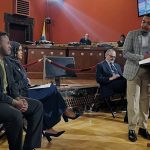
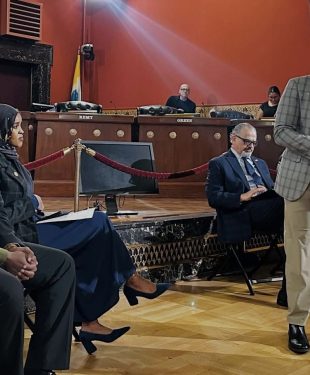
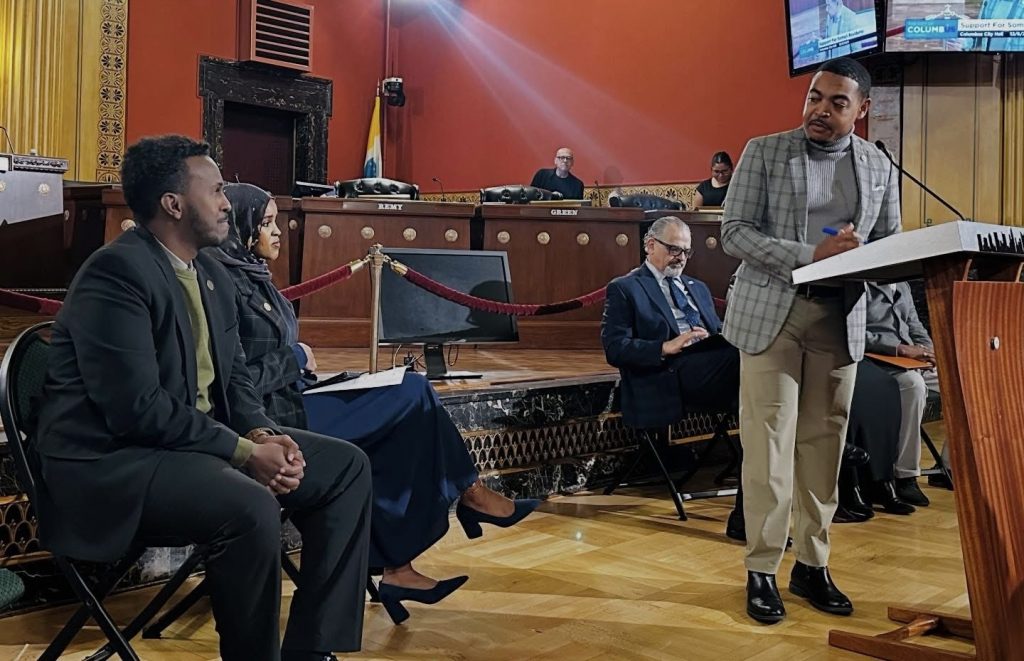
Inside Columbus City Hall, the People’s House, the air was already thick with sound. Many tongues moved at once—Somali, English, the soft friction of translation and urgency layered together. Coats brushed. Shoes scuffed. Microphones tested. The room felt like a held breath.
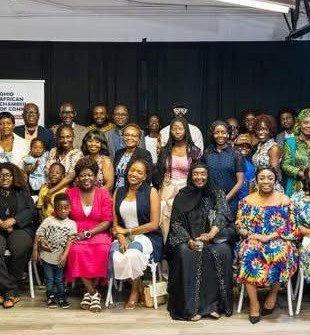
The bright lights flooded the historic chamber, revealing what Columbus looks like when stripped of rumor and rhetoric: a living mosaic. Elders in scarves. Students with phones raised. Parents holding their children close. Faith leaders, city officials, state representatives, organizers, neighbors. Continents sat shoulder to shoulder beneath architecture built long before most of us were imagined. And still—no one melted. No one twisted. No nightmare of division came true.
Instead, hearts softened toward one another like Valentine’s chocolate left in the sun. What filled the air wasn’t rage. It was a concern—thick, visible, rising like smoke from burning autumn leaves in winter. You couldn’t always see the flame, but you knew something important had been set on fire.
When the Mayor spoke, his words came steady and clear: Columbus is a safe and welcoming city. Not as a slogan, but as a duty. A promise. Columbus Council President Shannon Hardin followed, reinforcing that this city belongs to all who call it home—not just on paper, but in practice.
Then came the voices carrying the weight.
State Representative Israel Mahmoud, his voice worn thin from days of phone calls, shared what had poured into his office: messages from concerned college students, from high schoolers, asking a question that should never live in the sulcus of the brain or on young tongues— “Why is the leader of the free world calling me garbage?”
The room shifted. The cold tried to hold on. The fire pushed back.
State Representative Munira Abdullahi, standing firmly in the same cultural garments worn proudly by young girls across the community, sent a message directly to the children listening beyond those walls:
“You matter. You are not garbage. The only garbage is a human who calls other humans garbage.”
She continued, naming the deeper injustice with precision: while families struggle to pay for medication, food, and housing, divisive rhetoric is used to distract from governmental failure. Racism, she reminded the room, has long been deployed as a political tool when accountability becomes inconvenient.
That sentence didn’t echo.
It didn’t need to.
Khalid Turaani, Executive Director of the Council on American-Islamic Relations, reminded the room that this tactic is not new, but rather amplified. Each time outrage loses its grip, cruelty escalates to redirect public attention. But he warned: gardeners do not get hypnotized by weeds.And that was when the garden revealed itself.
Muhammad Ali stepped forward and told his story—of arriving as a teenager, working as a security guard, building an education, and founding an engineering firm. He named what too often goes unsaid: Somali Americans are not visitors here. They are doctors and nurses. Teachers and business owners.
Students and families. And, he repeated for emphasis—voters. Somali community activist and healthcare worker Kawther Musa spoke next, her words carrying the invisible map between Columbus and Minneapolis—two cities bound tightly through family, travel, and shared pulse. Fear, she explained, was moving faster than facts. Children were being bullied in schools. Parents were asking whether they should carry passports in their own neighborhoods.The cold was no longer a metaphor.
It had consequences. Still, the room did not fold inward. It organized.December 13 is in motion to be named a Day of Action—a public showing of unity not only for the Somali community, but for immigrants across the city. A call was made for June to be recognized as Somali-American Heritage Month, anchoring belonging not in sympathy, but in civic permanence.This was no longer a press conference. It was a blueprint.For what local leadership looks like when national leadership turns cold as ice and cruel.
For what it means to protect neighbors in real time.
For how a city chooses to be when tested.As the final speakers closed, the mood had shifted. People did not rush out. They lingered. Hugged. Exchanged numbers. Children ran toward elected officials without fear. Volunteers formed small clusters, already planning next steps. What began as a response ended as a formation.
When I stepped back onto the stone steps, winter wind caught my face again—sharp and undeniable. But something inside was warmer.
The thorn may be loud.
The weed may grab attention.
But the future belongs to the gardeners.The ones willing to cut to the root.
The ones unafraid to protect the whole garden.
The ones who know every flower matters.On this cold day in Columbus, the gardeners showed up. And for a moment—just long enough to matter—the cold had to step back and make room for the fire.
Support the New Americans magazine to continue to serve our community with precise news that affects the new American, immigrant and refugee community. https://paypal.com/donate/? Dr;/.hosted_button_id=8LHFS78NRNJJY&source=url




Leave a Reply
You must be logged in to post a comment.